Padel Court Positioning Fundamentals UK 2026
Padel court positioning UK 2026: net vs baseline play, partner coverage, attacking vs defensive, wall play positioning.
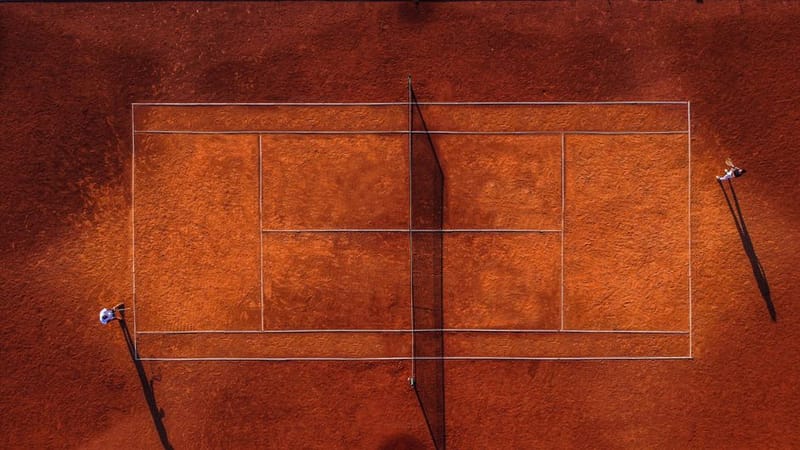
Court positioning matters more than any other skill in padel. This guide covers the fundamentals + tactical principles UK club players need to master.
Why positioning matters more than strokes
The biggest leverage point.
Among intermediate UK club players, positioning explains 60-70% of match-winning differences. Strokes explain ~20-30%. The remaining is fitness + reaction.
Why positioning dominates:
- Court is small (20m × 10m) - small positioning errors create large gaps.
- Ball travel time is short (especially at net) - reaction matters less than pre-positioning.
- Doubles geometry: two-player coverage can be optimised or wasted.
- Wall play: positioning relative to walls determines whether you attack or defend.
Practical implication:
- A player with good positioning + average strokes typically beats a player with good strokes + poor positioning.
- UK club lessons increasingly start with positioning before stroke-mechanics drills.
- Studying recorded matches (your own + pro) reveals positioning insights faster than stroke study.
Three primary positions
Net, mid-court, baseline.
1. NET (attacking position):
- Both partners 1-2m from net.
- Goal: pressure opponents; finish points with volleys + smashes.
- When to be here: ball is high (lob coming back); ball is short; you've just smashed.
- Risks: vulnerable to high lobs (opponents drive you back); requires good reaction time at net.
2. MID-COURT (transitioning position):
- Both partners at the service line.
- Goal: covers transitions between net + baseline; setup for dink shots.
- When to be here: ball is medium-height; you're transitioning forward to net; ball just passed your net partner.
- Risks: gets attacked from baseline; minimal court coverage.
3. BASELINE (defensive position):
- Both partners at or behind baseline.
- Goal: defensive rallies; using back wall to your advantage; tiring opponents.
- When to be here: ball is deep + hard; opponents are attacking; you're recovering from being lobbed.
- Risks: gives opponents net dominance; harder to win points from here.
Horizontal division (LEFT/RIGHT):
- Used when both partners are at the SAME DEPTH (net or baseline).
- Each covers their half of the court (5m wide each).
- Centre balls: by convention, the player whose forehand is at centre takes it.
- The 'I formation' in padel doesn't exist - always two players side-by-side.
Forehand/backhand assignment:
- Standard 2-righty pairing: deuce-side (right) player has forehand near centre. Take centre balls.
- Lefty + righty pairing: both forehands face centre. Both take centre, by partner agreement.
- Mixed gendered doubles: forehand player typically takes centre.
Wide shots:
- Each partner covers their own wide ball.
- Don't trade off - that's the partner's responsibility.
Dink shots:
- Both partners stay close to net.
- Whichever has clearer line to ball plays it.
- Communication ('mine'/'yours') important on close calls.
Transition positioning - moving between zones
The strategic skill.
From baseline to net (offensive transition):
- Triggered by: opponent makes weak return; ball lands short; your team hits an approach shot.
- Both partners move forward together.
- Goal: end up at net within 2 shots.
- Critical: don't get caught between baseline + net (mid-court) for >1 shot.
From net to baseline (defensive transition):
- Triggered by: opponent hits high lob over your net partner.
- Both partners move backward together.
- Goal: defend the lob + start rebuilding rally from baseline.
- Critical: don't get caught at mid-court while opponents attack.
Mid-court is a transition zone, not a destination:
- Don't camp at service line.
- Either move forward to net OR move back to baseline based on incoming ball.
- Decision time: 0.5-1.0 seconds between opponent contact + your response.
Common positioning mistakes
What new players do wrong.
- One partner at net, one at baseline: 6m gap exploited every time. Always move together.
- Both staying at baseline against attackers: gives opponents net dominance + control of rallies. Push forward when opportunity arises.
- Camping at mid-court: mid-court is a transition zone, not a destination. Forward or back.
- Over-commit to net + get lobbed: if opponents lob frequently, position 2-3m from net (not 1m) to defend lobs more easily.
- Following ball with body instead of sliding sideways: maintain forward-facing position; slide laterally.
- Returning to centre after every shot: position should reflect where the ball IS going, not where it WAS.
- Ignoring partner's position: padel is a team sport; check partner's position before deciding own.
- Not communicating in centre-ball situations: 'mine!' or 'yours!' - reduces hesitation + collisions.
Skill progression - what to learn when
Stage by stage.
Beginner (first 3 months):
- Net play position (most rewarding learning).
- Basic rule: same depth as partner.
- Forehand vs backhand assignment in 2-righty pairing.
Intermediate (3-12 months):
- Transition timing (when to move forward vs back).
- Defensive baseline positioning.
- Mid-court avoidance.
- Dink shot positioning.
Advanced (12+ months):
- Wall play positioning (anticipating back wall + side wall returns).
- Space-management (forcing opponents into corners).
- Tactical positioning by score (defensive at 0-30 down; aggressive at 30-15).
- Mixed doubles positioning nuances.
Wall play positioning
Unique to padel.
Padel walls (back glass + side mesh) create unique positioning considerations:
When opponent hits to your back wall:
- Stay at baseline; let ball bounce off wall.
- Position 1-2m forward of where you expect ball to come back to you.
- Ball bounces with reduced pace - you have more time than a fresh shot.
When you hit to opponent's back wall:
- Move forward to net (give opponent a difficult return).
- Partner moves with you.
Side wall positioning:
- Mesh side walls (not glass; soft + slows ball).
- Don't position too close to side wall - limits your reach forward.
- Use side walls defensively to take heat off opponent shots.