Padel Grip and Handle Wrap Guide UK 2026
Padel grip and handle wrap guide for UK players in 2026 - base wrap vs overgrip, sizing, when to replace, and sweat management.
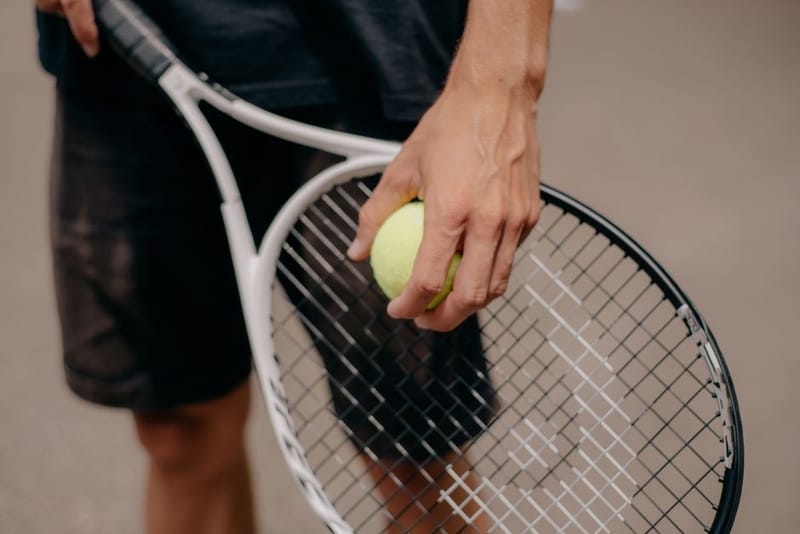
Most UK padel players never replace their base wrap and treat all grip work as overgrip swaps. That is fine for the first few months of play, but once the foam underneath the original grip compresses, no amount of overgrip layering brings the feel back. This guide separates the two layers, covers sizing properly, and points to what UK retailers actually stock in 2026.
What is the difference between a base wrap and an overgrip?
The base wrap (sometimes called the "replacement grip" or "base grip") is the cushioning layer factory-installed on every padel racket. It is glued or stapled at one end, wraps around the handle in an overlapping spiral, and finishes with a finishing tape at the top. Its job is to give the handle its diameter, its core cushioning, and its shock absorption against impact vibration from the ball.
An overgrip is a thinner, tackier tape wrapped on top of the base. It absorbs sweat, adjusts tackiness, and gets replaced frequently. A worn overgrip can be peeled off in 30 seconds without touching the base wrap underneath.
Two consequences follow from this layering. First, the base wrap eventually breaks down even if you never touch it - the foam compresses, the leather or PU outer cracks, and the handle starts to feel hollow. No fresh overgrip fixes that, because the cushioning below is gone. Second, your effective grip size is the base wrap diameter plus however many overgrips you have layered. A second overgrip can add 2-3 mm; some players use this as a sizing trick rather than buying a larger handle.
How do I choose the right padel grip size?
Padel grip sizes are smaller and simpler than tennis. Most padel rackets ship in only two or three sizes (L2 and L3 cover the majority of UK adults; L1 is rare and intended for juniors or very small hands). Some brands omit grip-size labelling entirely and rely on a single handle dimension.
The standard measurement is the index-finger gap test. Wrap your hand around the handle as if shaking hands; you should be able to slide the index finger of your other hand into the gap between your fingertips and the base of your thumb. If the gap is too tight, the grip is too small; if you can fit two fingers, the grip is too large.
- L1 (4 inches / 102 mm circumference): Juniors, very small hands.
- L2 (4 1/8 inches / 105 mm): Most women, smaller-handed men, and players who prefer a tight grip for wrist snap on smashes.
- L3 (4 1/4 inches / 108 mm): The default for most adult male players in the UK. Provides forearm relief over long sessions.
If a brand only sells one size, that is almost always L2 or L2.5 - the assumption is that players who want a thicker handle add an overgrip layer to size up. This is why you sometimes see two or three overgrips stacked on a player's racket: they are sizing up to L3 or L3.5 effective from an L2 base.
When should I replace the base wrap?
The base wrap replacement interval depends on how often you play and how much you sweat. Three signals tell you it is time:
- The handle feels hollow on contact. Vibration from impact reaches the palm more sharply than it used to. The foam underneath has compressed.
- The outer layer has cracked or peeled. Most padel base wraps use a PU (polyurethane) outer that splits along the edge of the spiral after 12-18 months of regular play.
- Overgrips slip or twist. A worn base loses surface tackiness, so even a fresh overgrip rotates or wrinkles in use.
Rough intervals for UK players:
- Recreational (1-2 sessions/week): Replace base wrap every 12-18 months.
- Regular club (3-4 sessions/week): Every 6-9 months.
- Competitive (5+ sessions/week): Every 4-6 months.
Two base wraps that hold up well in the UK market: the Bullpadel Hesacore (ergonomic hex pattern, premium cushioning), and the Wilson Pro Performance Replacement Grip (cheaper, widely stocked, PU outer). Both are around £8-£12 at UK padel specialists.
When should I replace the overgrip?
Overgrip life is much shorter than base wrap life - measured in hours, not months. Three signals:
- The tackiness is gone. A fresh tacky overgrip grips back when you press a thumb against it; a dead one feels smooth.
- Sweat darkening or smell. Any padel overgrip absorbs sweat and eventually starts to feel damp even when dry, or develops an odour.
- The leading edge has lifted. Loose ends create blisters and twist the layer.
Replacement intervals:
- Tacky-style overgrips (Wilson Pro Overgrip, Yonex Super Grap): 5-10 hours of play. Best for dry hands, less ideal for heavy sweaters.
- Dry-style overgrips (Tourna Grip): 10-15 hours. Hold up better in heat and humidity but feel less tacky from the start.
- Hybrid PU overgrips (Head Hydrosorb, Bullpadel GS-200): 8-12 hours. Middle ground for UK players who sweat moderately.
A box of 12 overgrips runs £15-£25 at UK retailers and lasts a club player 3-6 months. Overgrips are the cheapest performance upgrade in padel; a fresh one is the single fastest way to make a tired racket feel new.
How do I manage sweat on the grip?
UK courts are mostly indoor or covered, so heat is rarely the issue - humidity is. Three practical sweat-management approaches:
- Towel between points. A small terry hand towel hooked through your shorts or laid on the bench. Wipe the handle between points if you feel slip, not just between games. This is the single biggest difference between players who change overgrips every two weeks and players who change them every two months.
- Two overgrips, one mid-session swap. Heavy sweaters carry a spare overgrip in their bag and swap mid-session if the first one saturates. Takes 90 seconds.
- Dry-style overgrip for heavy-sweat conditions. Tourna Grip is the canonical choice - chalk-finished cotton-feel; absorbs without going slick. Less tacky than Wilson Pro Overgrip but holds firm when the tacky options have gone glassy.
One thing to avoid: chalk or rosin powder. Tennis players sometimes use these on tacky grips during humid play; in padel the gritty residue gets onto the racket face and into the wall paint over time. Stick to towels and overgrip swaps.
How do I install a new overgrip?
The technique most beginners get wrong is the start angle. The overgrip needs to spiral up the handle from the butt cap towards the throat, overlapping itself slightly with each turn. About 60% of right-handers want a left-spiralling installation (which gives the trailing edge a natural lift-resistant angle when the racket rotates in the swing); left-handers want the opposite.
- Step 1: Peel off the old overgrip and finishing tape. Wipe the base wrap with a dry cloth.
- Step 2: Remove the adhesive backing from the tapered end of the new overgrip.
- Step 3: Stick the tapered end at the butt cap, aligning it with the bevels of the handle.
- Step 4: Wrap upwards, holding the overgrip in light tension, overlapping each turn by 2-3 mm. Too much overlap creates a fat handle; too little leaves bumpy ridges.
- Step 5: Finish 2-3 cm below the top of the handle (where the throat-bridge starts). Cut at an angle, wrap the included finishing tape over the cut edge.
A neat installation takes 2-3 minutes once you have done it half a dozen times. The most common mistake is too much tension on the wrap, which compresses the base layer and shortens its life.
What about handle bevels and shape?
Padel handles are usually octagonal but with shallower bevels than tennis handles - some brands have moved towards almost round handles in 2026 to reduce wrist strain on continental-grip backhand wall play.
Two manufacturers have pushed handle geometry as a feature this year: Bullpadel Hesacore uses a hex pattern that is more pronounced than a standard octagonal bevel, marketed as a vibration-reduction design; Adidas has rounded its grips since the Metalbone 3.4 generation, which suits players who change grips frequently during a point.
None of this matters much for recreational play - all of these handle shapes work. The choice becomes relevant only if you have specific complaints (wrist strain, vibration soreness, blisters in particular spots) that a different geometry might fix. The overgrip guide covers brand-specific tackiness; this piece covers what is underneath.
UK retailers and price points
Where UK players buy grip supplies in 2026:
- Pure Racket Sport (purerackerracket.com / Newbury showroom): full range of overgrips and base wraps; Bullpadel and Head replacement grips usually in stock.
- PadelGB: padel-specific selection including Nox and Vibora overgrips; smaller catalogue but well-curated.
- Amazon UK: cheapest unit price on Wilson Pro Overgrip (12-pack ~£20), Yonex Super Grap, and Tourna Grip. Slower base-wrap stock; brand-specific replacements harder to find.
- Sports Direct / Decathlon: budget options - the Decathlon Artengo overgrips are inexpensive (~£4 for 3) and decent for casual play.
For complete builds of grip-related kit, see our overgrip guide and the broader racket buying guide.
Frequently asked questions
Can I use a tennis overgrip on a padel racket?
How many overgrips can I stack on one padel racket?
Do padel grip sizes use the same L1/L2/L3 system as tennis?
Why does my padel base wrap feel dead after six months?
Do I need a different overgrip for indoor vs outdoor UK play?
Should I tape over the butt cap to extend my grip size?
The bottom line
For UK padel players, the grip-and-wrap system is one of the highest-return maintenance habits in the sport. A fresh overgrip costs £2 and makes a tired racket feel new; a replacement base wrap costs £10 and adds 12 months of life to a £200+ racket. The two together cost less than a single hour of court time, and they restore the racket's feel and shock-absorption in a way no other upgrade can.
The simple framework: change your overgrip every 2-4 weeks of club play; check your base wrap every 6 months and replace it when it goes hollow. Carry a towel and a spare overgrip in your bag. Run the index-finger gap test once a year - hand size changes very slowly, but grip-size mistakes are the most common comfort issue in club padel and they are usually fixable for under £15.
The official rules of padel are governed by the FIP (International Padel Federation), which standardises racket and handle specifications for tournament play.
Check current padel grip and base wrap prices
Pure Racket Sport and PadelGB carry the full UK selection; Amazon UK is cheapest for Wilson Pro Overgrip multi-packs.