Padel Paddle Holes Perforation Guide UK 2026
Padel paddle holes UK 2026: hole count, sizes, patterns - how perforation affects spin, power, control, and pre-purchase decisions.
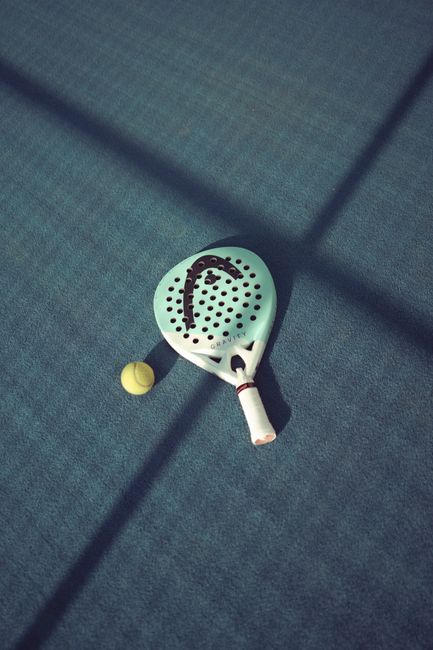
Padel paddle perforations are not just aesthetic - they directly shape how the paddle plays. This guide explains UK 2026 perforation patterns, hole sizes, count, and how each affects spin, power, and aerodynamics for buyers picking their next paddle.
Why padel paddles have holes
Physics of perforation.
Three core reasons paddle faces are perforated:
- Weight reduction: a solid foam paddle would weigh 450-500g, too heavy for fast paddle play. Perforations remove ~20-30% of face mass, bringing total weight down to 350-380g typical.
- Aerodynamics: air flows through perforations during swings, reducing drag. This translates to faster swing speeds + easier overhead smashes (volleys, smashes, bandejas).
- Spin generation: hole edges grip the ball during brushing strokes. The textured rim of each hole acts as a small biting point - more contact + sharper edges = more spin.
Additional benefits:
- Sweet-spot tuning via hole-density variation (more sparse perforation in sweet-spot area = stiffer + more solid feel).
- Reduced wind resistance during defensive lobs + slow rallies.
- Visual + brand differentiation across manufacturers.
Hole count - 40 to 90 range
What count means.
Low hole count (40-55):
- Heavier paddle face (less material removed).
- More stable strike feel; less paddle flex.
- Better for power-oriented players generating mass-driven power.
- Typically seen on advanced attacker / hard-hitter paddles.
Medium hole count (55-75):
- Most common range for modern padel paddles.
- Balanced weight + aerodynamic profile.
- Suitable for most player levels + styles.
High hole count (75-90):
- Lighter paddle face; faster swing speed.
- Better for control-oriented players + defensive specialists.
- More aerodynamic for overhead shots.
- Less stable face on miss-hits (more paddle deflection).
Typical hole counts by player type:
- Beginner: 55-65 holes.
- Intermediate all-rounder: 60-75 holes.
- Power attacker: 50-60 holes.
- Control defender: 70-80 holes.
- Speed spin player: 55-70 holes (combined with larger hole diameter).
Hole size - 8mm to 13mm
Diameter changes everything.
Small holes (8-10mm):
- Less ball contact with hole edges = less spin generation.
- More uniform strike surface; control-friendly.
- Typical on control / defender paddles.
Medium holes (10-11mm):
- Balanced spin + control profile.
- Most common diameter on intermediate / all-rounder paddles.
- Suitable for most player levels.
Large holes (11-13mm):
- Hole edges have more circumference to bite the ball.
- Significantly more spin generation, especially on brushing topspin + slice.
- Typical on attacker / spin player paddles.
- Slightly less stable strike face on miss-hits.
Why hole size matters more than count for spin:
- Spin from perforations comes from hole-edge ball contact during brushing strokes.
- A larger hole has more circumference (each edge being a 'bite point').
- A 12mm hole has ~50% more biting circumference than an 8mm hole.
- 50 large holes can generate more spin than 80 small holes.
Perforation pattern - uniform vs varied
Where holes are placed.
Uniform perforation:
- Holes evenly distributed across paddle face.
- Consistent feel across strike area.
- Cheaper to manufacture; common on entry-level paddles.
- Compromises sweet spot stability (most-hit area gets too perforated, reducing solid feel).
Sweet-spot-dense pattern:
- More holes near sweet spot (center / upper-center of paddle).
- Sparser perforation at frame edges + bottom of face.
- Better sweet-spot feel; more responsive on perfectly-struck balls.
- Typical on intermediate + advanced paddles.
Sweet-spot-sparse pattern:
- Fewer holes in the sweet-spot zone (or none at all).
- More perforation at frame edges to retain weight balance.
- Premium pattern - solid sweet-spot feel + lighter overall weight.
- Typical on premium attacker paddles (Wilson Bela Pro, Head Pro Speed, Bullpadel Hack).
Asymmetric patterns:
- Different hole densities top vs bottom of paddle face.
- Top-heavier perforation = more aerodynamic for smashes.
- Bottom-heavier perforation = more spin generation on lower contact (lobs + defensive shots).
- Seen on specialised attacker / defender paddles.
Spin generation - hole role vs face material
Holes are half the spin equation.
Two spin-generation factors on padel paddles:
- Face material texture: rough-foam paddles (textured EVA / FOAM surface) provide grip across the entire face during contact. Premium grit-coated faces generate even more spin.
- Hole edges: sharp-edged perforations bite the ball during brushing strokes, adding rotational force.
Best combinations for spin:
- Textured rough-foam face + 11-13mm sharp-edged holes = maximum spin generation.
- Found on premium attacker / spin paddles.
Combinations that limit spin:
- Smooth carbon-fiber face + small 8-9mm rounded holes = control-focused, low spin profile.
- Found on entry-level + pure-control paddles.
Practical implication:
- Don't focus only on hole count when evaluating spin potential - face texture is equally important.
- A 50-hole rough-foam paddle will out-spin a 90-hole smooth-carbon paddle.
How to evaluate perforation in-store / online
Pre-purchase checks.
In a UK padel store (e.g. Padel Direct, Padel Centre, AMP Padel):
- Hold the paddle up to light - count holes (roughly) + estimate diameter.
- Run a fingernail along several hole edges - catches = sharp edges = better spin.
- Check pattern - look for sweet-spot density variation.
- Compare to manufacturer's stated specs on the paddle's tag.
- Swing the paddle - feel if it cuts through air smoothly or feels resistant.
Online (specs only):
- Check the manufacturer's product page - reputable brands list hole count + size.
- Read user reviews for spin + power feedback.
- Cross-reference with YouTube reviews showing the paddle face close-up.
- If specs aren't listed, the paddle is likely a budget option with generic perforation.
Red flags:
- No hole count or size in spec sheet (suggests budget construction).
- Photos show rough or uneven hole edges (poor manufacturing).
- Manufacturer makes no mention of perforation design (cost-cut on this aspect).
Choosing paddle perforation for your style
Match perforation to playing identity.
If you're a beginner:
- 55-65 holes, 10-11mm diameter, uniform pattern.
- Balanced spin + control + power.
- Avoids extreme attributes that confuse learning.
- Examples: Bullpadel Vertex Comfort, Adidas Adipower CTRL.
If you're an attacker (power player):
- 50-60 holes, 11-13mm diameter, sweet-spot-sparse pattern.
- Heavier paddle face + larger holes for spin on power shots.
- Examples: Head Pro Speed, Bullpadel Hack Carbon, Wilson Bela Pro.
If you're a defender (control player):
- 65-80 holes, 9-11mm diameter, sweet-spot-dense pattern.
- Lighter face + smaller holes for fast swing + control.
- Examples: Adidas Adipower Control, Babolat Air Veron.
If you're a spin-focused player:
- 50-65 holes, 11-13mm with sharp edges, plus rough-foam texture.
- Maximises spin generation across both face texture + hole edges.
- Examples: Bullpadel Vertex 04 Comfort, Wilson Bela Bold.
If you're an all-rounder (balanced player):
- 60-70 holes, 10-12mm, any pattern.
- Most paddles in this category work fine.
- Focus on other characteristics (weight, balance, shape).