Padel vs Tennis: How They Differ and Which to Pick
Padel and tennis look similar but play very differently. Court, rackets, serve, walls, and crossover tips for tennis players in 2026 UK.
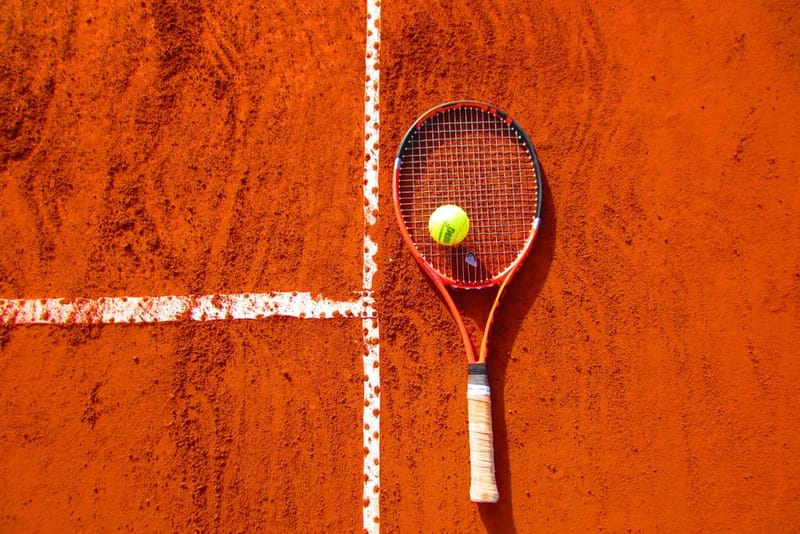
Padel and tennis share a scoreboard and a yellow ball, and that is roughly where the similarities end. The court is smaller and walled in, the racket is solid and stringless, the serve has to come in underarm, and the back glass is a feature of the game rather than a backstop. If you have ever played tennis, your first hour of padel will feel familiar enough to score points - and your second hour will start showing you what you have to unlearn.
How is a padel court different from a tennis court?
A padel court measures 10 metres wide by 20 metres long, enclosed by glass and metal-mesh walls that are part of play rather than out-of-bounds. A tennis singles court is 8.23 m by 23.77 m and entirely open. The padel court is shorter than a tennis court and only marginally wider, but the walls give it a totally different rhythm - a ball that would be a clean winner past the baseline in tennis comes back at you in padel.
The back walls stand 3 metres tall, while the side walls drop from 3 metres at the back to 2 metres towards the net, with metal mesh on top of the side glass. Indoor venues need around 6 metres of ceiling clearance to allow lobs and bandejas without interference.
Court dimensions at a glance
- Padel court
- 10 m × 20 m, enclosed by glass + mesh walls
- Tennis singles court
- 8.23 m × 23.77 m, open
- Tennis doubles court
- 10.97 m × 23.77 m, open
- Padel net height
- 88 cm centre, 92 cm at posts
- Tennis net height
- 91.4 cm centre, 107 cm at posts
- Padel back wall
- 3 m glass
- Tennis back wall
- n/a
How is a padel racket different from a tennis racket?
This is the change that most surprises players picking up a padel racket for the first time. There are no strings. The hitting surface is a foam-and-carbon-or-fibreglass composite with a perforated face, and the whole frame is closer to a thick paddle than to a tennis racket. Padel rackets are around 45 cm long with a short handle; tennis rackets are 68–74 cm with a longer grip section.
The shorter lever arm means less swing speed, but the solid face delivers a different kind of contact: you generate spin and pace through the foam compressing against the ball, not from string snap-back. The shape of the head dictates feel - round shapes (low balance) favour control, diamond shapes (high balance) favour power, and teardrops sit between the two. None of this maps onto tennis racket choice.
Racket specifications
- Padel racket length
- ≈ 45 cm
- Tennis racket length
- 68–74 cm
- Padel hitting surface
- Solid foam-and-composite, perforated
- Tennis hitting surface
- Strings (multifilament, polyester, gut, or hybrids)
- Padel racket weight
- 350–385 g (typical)
- Tennis racket weight
- 270–340 g (typical)
How is the padel serve different from the tennis serve?
The serve is the rule that separates a padel rally from a tennis rally fastest. The server bounces the ball on the ground in their service box, then strikes it underarm with contact at or below waist level - the 2026 FIP rulebook codifies this as a maximum 1.06 m off the floor. There is no tennis-style overhead toss-and-strike. The ball must clear the net, land in the diagonal service box, and not hit the side wall before the receiver plays it.
Two faults end the point, the same as in tennis. The server gets an alley to stand in (between the central service line and the side wall, behind the service line) and stays there until contact is made. Tennis players used to a kick or slice serve can transfer the spin idea, but the contact point is now hip-height, not above the head.
How do you actually use the walls in padel?
Padel allows the ball to bounce once on the floor of your side, then rebound off any of the back glass or side walls on your side, and still be playable. This is the squash-like quality of the sport that has no analogue in tennis. The first deep ball that gets past you and comes back off the back glass is the moment most tennis players realise they are playing a different game.
The serve is the exception to the wall freedom - a serve that hits any wall on the receiver's side before bouncing, or hits the side wall first, is a fault. Once the rally is alive, though, the back glass is your friend. Reading the rebound off the back wall is the single new skill tennis crossovers most often cite as the slowest to develop.
Is padel scoring really identical to tennis?
This is the easy bit. Padel uses 15-30-40-game scoring, deuce, advantage, six games to a set with a tie-break at 6-6, best of three sets at amateur level. The advantage rule on deuce is identical. If you can keep score in tennis, you can keep score in padel without learning anything new - the only common variant is the no-ad point at deuce in some social formats, which tennis players already see in some leagues.
What tennis skills transfer to padel?
The honest answer is that tennis players have a real first-session advantage and a real medium-term ceiling problem. Footwork transfers cleanly: split-step timing, lateral coverage, reading an opponent's body language, and tracking the ball through contact are the same skills with the same vocabulary. Tennis doubles players adapt fastest, because they already think in terms of poaching, the I-formation, and middle-court coverage - all of which padel rewards even more aggressively than doubles tennis.
Where the carryover hurts is in technique. The semi-western forehand grip that produces a heavy topspin tennis ground stroke is a liability in padel; the continental ("hammer") grip, where your hand sits on the racket the same way you would shake hands with it, is the foundation grip in padel and stays on for roughly 80% of shots - including smashes and overheads. Tennis players who refuse to switch grip end up with a wristy game that hits the back glass as often as the opponent's court.
Long swing preparation is the second tax. Tennis ground strokes have time to wind up because the court is deep and the ball travels far between contacts. Padel rallies happen in tighter space, often at the net, and the wall behind you punishes a big take-back. Compact preparation, a short swing, and a punch at the ball replace the loop. Power-tennis players also have to learn that hitting harder mostly just feeds the back glass - placement, angle, and patience win padel points, not pace.
What mistakes do tennis players make in padel?
Keeping the semi-western forehand grip
It feels powerful and produces topspin in tennis, but in padel it forces a closed racket face that flies the ball into the side wall. Switch to continental and re-learn the angle.
Camping at the baseline
Tennis instinct says retreat to the back of the court. Padel rewards the opposite - once you have an attacking ball, get to the net and stay there. The back glass deals with anything you would have run down in tennis.
Hitting too hard
Power that wins points in tennis just feeds the back wall in padel. Controlled placement, lobs over the net player, and patient construction are how points end on a padel court.
Smashing flat
A flat tennis-style smash that lands deep in the opposing court usually pops back off the glass for an easy counter. Padel teaches the bandeja (a controlled overhead with spin) and the víbora (an angled overhead with sidespin) instead - neither has a true tennis equivalent.
Big take-back on volleys
Tennis-trained volleys often start with the racket out behind the shoulder. At the padel net, that swing arrives late and goes long. Punch the ball with a short, compact stroke, racket head out in front.
How big is padel in the UK now?
860,000
UK padel players (year ending 2025)
1,553
UK courts (end of 2025)
559
UK venues with padel
57%
British adults aware of padel
The numbers explain why so many tennis players are getting asked to give padel a try by their friends. Player numbers more than doubled in 2025 and the LTA has invested over £7.5 million directly into court construction, supporting a further £10.5 million from partners. Awareness has gone from a quarter of the population to over half in two years. The supply side has caught up too - 1,553 courts means that for most of the UK there is a padel venue within reasonable driving distance, even outside London.
If you want the practical version of all of this, our UK courts guide lists what to look for in a venue, our beginner's guide walks through your first session in full, and our complete rules explainer covers the bits this comparison only summarised.
Padel or tennis - which should you pick?
You don't actually have to. The two sports complement each other well: padel improves your reflexes, your doubles instincts, and your touch at the net, while tennis builds the endurance, ground-stroke discipline, and serve mechanics that padel trains less. Plenty of UK clubs now offer both on one membership.
If you have to choose, the answer turns mostly on access and social pattern. Padel is almost always doubles, almost always more sociable, easier to be competent at quickly, and gentler on shoulders and elbows because of the underarm serve and lighter ball pressure. Tennis is deeper as a long-term skill ceiling, has a clearer competitive ladder for both singles and doubles, and is the more individual game.
Most tennis players who try padel keep playing tennis. They just play less of it.
Frequently asked questions
Is padel easier than tennis?
Can you use a tennis racket on a padel court?
Is the ball the same as a tennis ball?
Do tennis players adapt quickly?
What does it cost to play padel in the UK?
New to padel? Start with the rules.
Our complete 2026 rules explainer covers serve, walls, faults, and the FIP changes most amateurs miss.