Can You Convert a Tennis Court to Padel?
Yes, you can convert a tennis court to padel. What's involved, how many padel courts fit, rough UK costs, and whether you need planning permission.
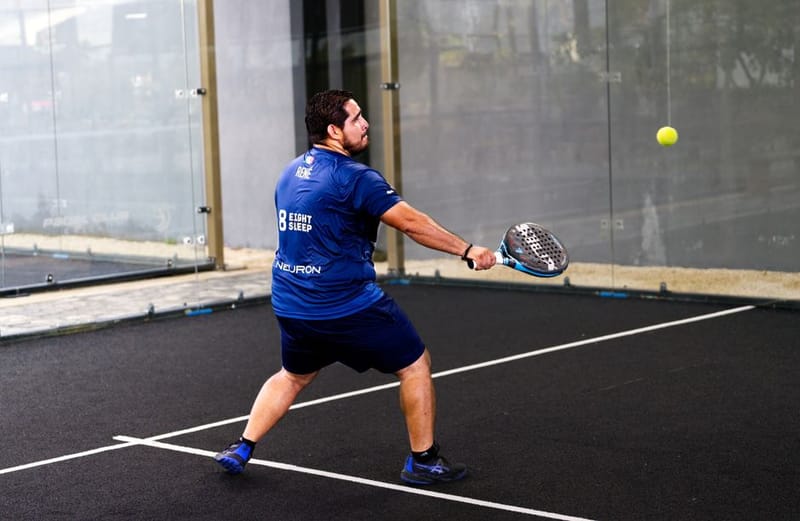
With padel booming and some tennis courts sitting underused, converting a tennis court to padel is an increasingly common question for clubs, councils and private owners. The short answer is yes - the footprint works well - but a conversion is a proper construction project, not a quick resurface. Here is what fits, what the work involves, the rough UK costs, and the planning rules to be aware of.
Can you fit a padel court on a tennis court?
Yes, and the sizes line up neatly. A standard padel court is 20 metres long and 10 metres wide - smaller than a tennis court's full playing area, which is why the footprint of an existing tennis court lends itself to padel. As a rough guide, a single tennis court typically has room for one or two padel courts, and a larger tennis facility with several courts can sometimes fit up to three. If you are building more than one, allow a gap of around 1.5 metres between courts. For the exact playing dimensions, see our guide to padel court dimensions and net height.
What does a tennis-to-padel conversion involve?
Padel is played inside an enclosed court, so the biggest change is adding the walls the game is built around. A padel court needs a rebound enclosure four metres high: the lower three metres are a solid or transparent surface - typically toughened glass or, sometimes, brick - that the ball can be played off, and the top metre is a 50mm by 50mm steel mesh. That glass-and-mesh cage is what turns a flat court into a padel court.
The rest of the work usually includes:
- The base. Padel needs a level, well-drained base. An existing tennis base can sometimes be reused if it is sound and the right size, which saves money - but its condition and drainage have to be assessed first.
- The surface. An artificial grass (astroturf) surface with a sand infill is laid over the base.
- Lighting. Floodlighting is usually added so the court can be used through the evening, which is where much of the demand is.
- Drainage and groundworks. Any drainage or levelling issues have to be sorted before the surface goes down.
How much does it cost to convert a tennis court to padel?
A conversion is a five-figure project. A single padel court installation in the UK typically runs from around £45,000 to £80,000 or more, and full builds with multiple courts, premium glass, drainage and floodlighting can reach well into six figures. Converting an existing tennis court can come in lower if the base is reusable, since reusing sound groundwork removes one of the more expensive elements - but that saving depends entirely on the condition, size and suitability of what is already there.
For a fuller breakdown of the numbers, including the return-on-investment maths for clubs and operators, see our guide to padel court construction costs in the UK.
Do you need planning permission to convert a tennis court?
Usually, yes - at least to some degree. Because a padel court adds walls up to four metres high and often floodlighting, it changes the structure and character of the site, which frequently takes it beyond permitted development. Some straightforward tennis-court conversions can fall under permitted development, but the height of the enclosure, floodlights, and any noise concerns commonly trigger a full planning application. The UK government's overview of when you need planning permission is the place to start, and your local planning authority can confirm what applies to your site.
Budget roughly £500 to £5,000 for the planning side - applications, plus any noise assessments or lighting reports the council asks for. Padel can be noisier than tennis (the ball off glass, and evening play), so noise is a common sticking point near housing, and it pays to address it early.
Is it worth converting a tennis court to padel?
It often is, but it comes down to demand and the specifics of your site. Conversion makes most sense when a tennis court is underused, there is genuine local padel demand, and the existing base and space suit the new courts. For clubs, adding padel can bring in new members and better utilisation from a footprint that was not earning its keep. For a private owner it is a big commitment, so it is worth being confident about how much the court will actually be played.
Because a padel court is enclosed and single-purpose, converting a tennis court is usually a one-way decision - so it is worth getting a specialist to assess the site, the base and the planning position before committing. New to the sport and weighing it up? Our beginner's guide to padel is a good starting point.
Frequently asked questions
How many padel courts fit on a tennis court?
How much does it cost to convert a tennis court to padel?
Do you need planning permission to convert a tennis court to padel?
Can you reuse a tennis court base for a padel court?

Padel Court Dimensions and Net Height
Padel Court Construction Cost in the UK