How to Find a Padel Partner in the UK (2026 Guide)
How to find a padel partner in the UK in 2026 - Playtomic Open Matches, MATCHi, club mixers, coaching, and the etiquette of joining a 4.

Padel is one of the only mainstream racket sports played exclusively as doubles. You always need a 4 - there's no singles format at clubs, no informal hit-around with one other person. That structural fact makes partner-finding the gating problem for most new UK padel players, particularly those without an existing tennis-or-squash group ready to switch over. The good news is that the UK padel community has built credible solutions; the bad news is that the route to using them well requires getting honest about your level and how you want to play.
This guide walks through every meaningful partner-finding route on the UK padel scene in 2026 - platform-based, club-based, and event-based - with the social etiquette that makes each of them work. Pair with our booking apps comparison for the platform mechanics. Last reviewed: 11 May 2026.
Why does padel make you find a partner?
Why partner-finding is the gating problem
Tennis and squash both have informal one-on-one formats - you can phone one friend, book one court, hit balls. Padel can't be played that way. The court geometry, glass walls, and ball physics all assume four players. Most UK clubs won't even let two people book a padel court (some allow it for coached lessons; most don't). The practical implication: every padel session requires coordinating four people, and a partner-finding system needs to handle the 'you're a 1, you need a 3' problem efficiently.
Most UK padel players solve this in one of two ways: a fixed-foursome (a group of four who play regularly together) or an open-rotation (each session is built from a level-matched pool). The fixed-foursome is the simplest path once you have one; getting there is the question.
How do you use Playtomic Open Matches?
Largest UK pool, strongest level-matching algorithm
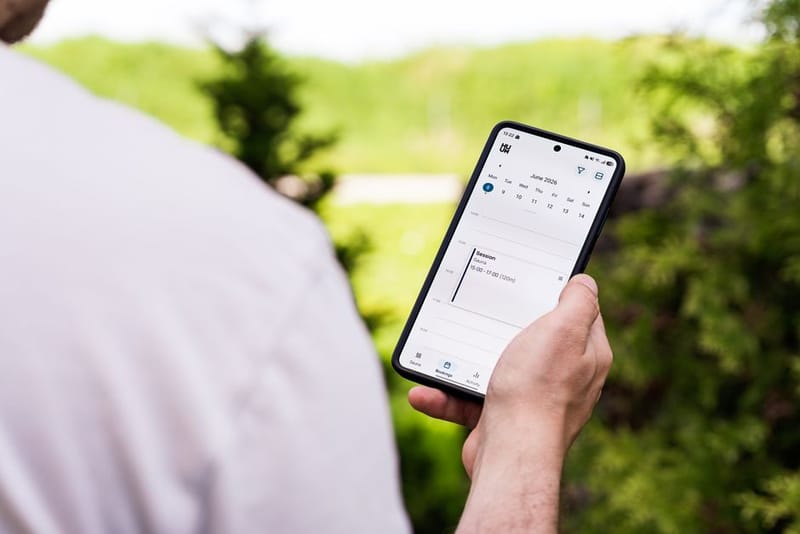
Playtomic dominates UK padel court booking (see our apps comparison for the broader picture). Its 'Open Matches' feature is the single highest-volume partner-finding system in UK padel - and the one to install first if you're starting from zero.
Set your Playtomic level honestly
The 0.0–7.0 scale auto-adjusts after each logged match. New players self-rate initially; the system corrects within 10–15 matches. The single biggest cause of failed partner-finding is players who self-rate above their actual level - they get joined into matches they can't keep up with, the games are unenjoyable, and their level then drops over the next few sessions.
Browse open matches by level + location + time
Other players advertise open matches - sessions they've started organising and need 1–3 partners for, filtered by level. Filter by your radius from home/work, your level (typically +/- 0.5 of your own), and your available evenings.
Join early - popular slots fill in hours
Evening open matches at busy London / Manchester / Birmingham clubs typically have all four slots filled within 24–48 hours. The Playtomic notification system surfaces new matches as they're posted; turning notifications on for your saved clubs improves your hit rate.
Show up reliable, log the result
The matchmaking system runs on reputation. Players who no-show or arrive late get filtered out of open matches over time. Logging the match result after play (Playtomic prompts you) feeds the level-rating algorithm.
How do club mixer sessions work?
Where regular foursomes actually get formed
Most established UK padel clubs run regular mixer sessions - sometimes called 'open play', 'social padel', or just 'mixers'. Format varies: some are level-banded (intermediate-only, beginner-only), some are open-level with rotating partners, some are coach-organised. They're the highest-value partner-finding mechanism because they're explicitly designed for it.
Mixers usually run weekday evenings or weekend mornings. Cost varies from free (member-only sessions at some clubs) to £10–£20 (non-member sessions or coach-led mixers). Booking is typically through the club's primary platform - Playtomic for most clubs, ClubSpark for LTA-affiliated tennis-and-padel clubs, MATCHi for some newer venues.
Typical UK club mixer formats
- Beginner-only mixer
- Levels ~1.0–2.0, often introductory or part of a coaching block
- Improvers mixer
- Levels ~2.0–3.0, structured social play
- Intermediate / open mixer
- Levels ~3.0–4.5, the most common format
- Advanced mixer / Saturday tournament
- Levels ~4.5+, competitive social
- Mixed-doubles mixer
- Some clubs run gendered mixers (women's only, mixed)
- Format
- 1.5–2 hours, rotating partners every 8–12 minutes, then social drink
Are club WhatsApp groups worth joining?
How established UK padel clubs actually coordinate
Most UK padel clubs of any tenure have informal WhatsApp groups - sometimes one per club, sometimes one per level band. They aren't always advertised - you join after a few sessions when someone you've played with adds you, or after explicitly asking the club to add you to the player group.
WhatsApp groups handle three things efficiently: last-minute drop-out replacements (a 3pm 'someone dropped out, need a 4th for tonight 8pm' message), informal mid-week mixer organisation (someone proposes a session, three others reply, court booked), and travel coordination (matches at other clubs, regional play). They sit alongside the platforms rather than replacing them - court bookings still go through Playtomic or whichever platform the club uses.
Can coaching help you find a partner?
Group lessons as foursome-finding by stealth
For complete beginners, group coaching is usually the fastest social entry. A six-week beginner block at a UK padel club typically has 4–8 players per group, run weekly with a level-appropriate coach. By session 4, the regulars have started arranging non-coached sessions together. By the end of the block, most blocks have produced one or more fixed foursomes that continue without the coach.
Coaching also accelerates the technical level - and Playtomic-level - needed to access intermediate Open Matches and mixers. Players who skip the coaching block and self-teach via Open Matches often stall at 1.5–2.0 for longer than necessary, which limits the social pool available to them.
UK padel coaching as partner-finding - typical costs
- Beginner block (6 sessions, group)
- £90–£180 total - most efficient way to enter the community
- Improvers block (6 sessions, group)
- £100–£200 total
- Drop-in clinic (1.5 hours)
- £20–£40 - social per-session option
- 1-on-1 with coach
- £40–£70/hour - not social but accelerates level
- Where to find courses
- Each club's [primary booking platform](/blog/padel-court-booking-apps-uk-2026/) lists coaching; [LTA](https://www.ltapadel.org.uk/) Find a Coach
How does tournament play help you find better partners?
How to find partners at your aspirational level
Once you've stabilised at Playtomic 3.0+ and want to play harder padel, tournaments are the social-and-level-stretch path. UK padel tournaments are run by individual clubs, by the LTA (the official UK governing body), and by Premier Padel-affiliated event organisers. Entry is usually as a pre-arranged pair, sometimes as a singles entry into a partner-match pool.
The strategic value for partner-finding is that tournaments are the social hub for players one level above your current group. Entering a few tournaments per year - even with a regular partner - exposes you to better players, opens up better mixers, and accelerates the level-rating curve. UK tournament listings are aggregated on Playtomic, ClubSpark, and the LTA's Padel event listing.
What makes you welcome to join a four?
Unwritten rules that determine whether players want to play with you again
Show up 10 minutes early
Bookings are tight. Arriving 10 minutes early means you walk on court at the scheduled time. Arriving 'at' the booking time means you start at 5-past, the next group is queued, and the session is rushed. The biggest non-skill reason players get filtered out of Open Matches and mixers is consistent lateness.
Be honest about your level
Self-rating above your actual level wastes everyone's time. Self-rating below it (sandbagging into easier matches) gets you noticed in a bad way. The correct play is to set your initial level conservatively and let the algorithm adjust upwards as you log results.
Bring spare balls if asked
Padel balls last 4–6 sessions before they go flat. Clubs sometimes provide; sometimes the organiser brings them; sometimes everyone chips in. If you're new to a group, ask before the session - bringing a fresh tin is goodwill that pays back over months.
Take responsibility for organising
If you've played 5 matches with the same group, propose a session yourself rather than waiting for someone else to. Reciprocal organising is what turns a casual group into a fixed foursome.
Don't ghost a match you've committed to
Last-minute drop-outs are the worst behaviour in the padel community. If you genuinely can't make it, post the slot to the WhatsApp group or back to Playtomic Open Matches well ahead of time so the organiser can fill it. Ghosting at the last minute (or not turning up) is the fastest way to get removed from a group.
Buy a round after a club session
Most UK padel clubs have a bar or café. The after-session drink is where the next session gets organised. Skipping the social part means missing the partner-finding part.
What are the common pitfalls when finding a padel partner?
What to avoid
Filtering Open Matches by level too narrowly
A 0.1-level filter band cuts the available pool by 80–90% in most UK locations. Widen to +/- 0.5 of your own level and you'll find sessions every week instead of every fortnight.
Only using one platform
If your local club uses MATCHi or ClubSpark, Playtomic alone won't show you their open sessions. Cross-installation is the cost of entry - most active players run two apps.
Avoiding the club mixers
Open Matches are great for individual sessions but rarely build relationships. Mixers do. Skipping them means a slower path to a fixed foursome.
Self-rating above level to access better games
Backfires within 3–4 sessions - the algorithm corrects, you drop, and your reputation in the local pool takes a hit. The fast path to a higher level is to play at-your-level matches consistently, not to fake it.
Treating padel as solo sport with rotating partners
Padel rewards partner chemistry - knowing who'll cover the lob, who's stronger on backhand, who calls the smashes. Players who only ever play one-off Open Matches plateau faster than those who develop a regular partner relationship.
Frequently asked questions
How do I find a padel partner if I'm a complete beginner?
Can I play padel with just one other person?
How does the Playtomic level rating actually work?
What's the etiquette if I'm 30 minutes from a session and can't make it?
Should I join a club to find a padel partner?
Are there women-only or LGBT+ padel groups in the UK?
Is there a 'padel Tinder' for finding partners?
How long does it take to build a fixed foursome from scratch?
Padel Court Booking Apps UK 2026
Padel for Beginners UK 2026

Where to Play Padel in the UK
Diamond vs Round vs Teardrop Padel Rackets
Sources: Playtomic, MATCHi, and ClubSpark published platform features and UK adoption (current at 11 May 2026); LTA Padel pathway documentation; observed UK club mixer-session formats. This is an editorial community-entry guide, not regulated commercial advice. Platform features, club mixer formats, and coaching prices change - confirm directly with your local club and the apps before relying on specific details.