Padel Bandeja Shot Explained UK 2026
Padel bandeja UK 2026: when to use the defensive overhead, technique, body position, common errors, and how it differs from vibora and smash.
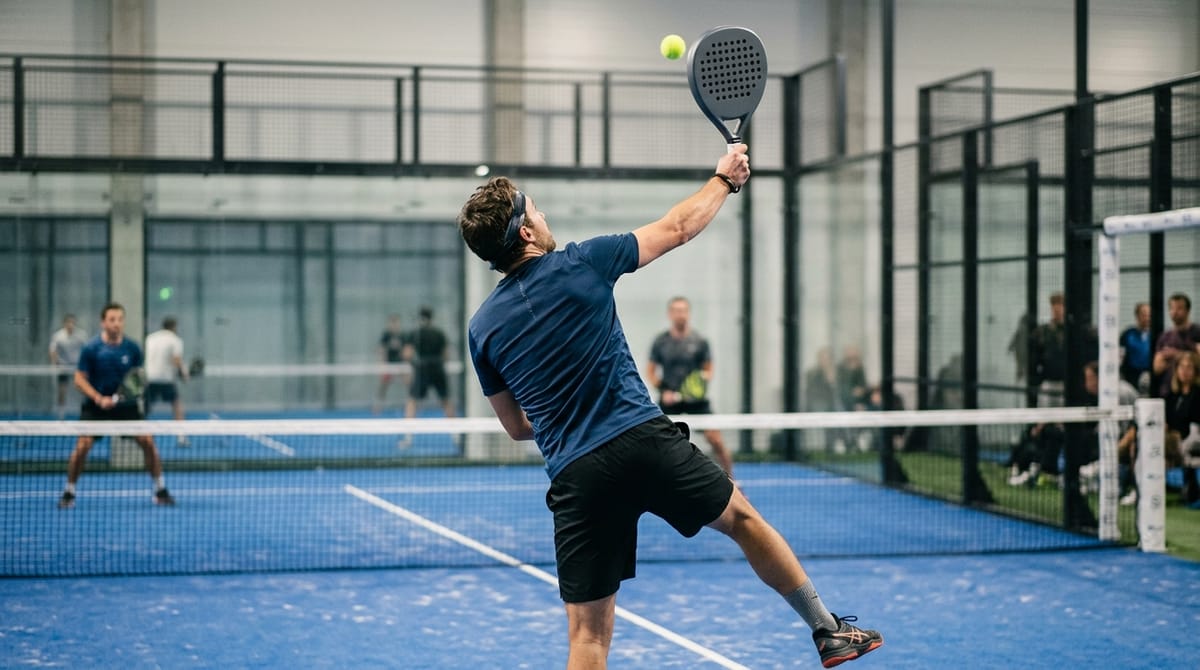
The bandeja is the most distinctively padel shot in the sport. It does not exist in tennis - the slice serve is the closest analogue, but the geometry, contact point, and tactical purpose are different. Learning to read when to play it (rather than smash) is what separates 3.0 club players from 4.0 tournament players, and it is the most asked-about technique in UK club coaching sessions.
What is the bandeja in padel?
The word "bandeja" is Spanish for "tray" - the shot gets its name from the tray-like motion the playing arm makes through contact, with the racket face slightly open and the swing path travelling from high to low at a shallow angle. It is a controlled, sliced overhead played with the continental grip (the same grip used for serves and volleys).
Tactically, the bandeja is the shot you play when an opponent's lob is too deep to smash effectively but not so deep that you need to retreat to the back wall. It travels with backspin, lands in the back third of your opponent's court, and either dies off the wall or skids low - both outcomes make a clean attacking return difficult.
Critically, playing a bandeja lets you stay at the net. A smash that fails to put the ball away resets the point and often forces you to retreat anyway. A well-placed bandeja keeps your team at the kitchen line and shifts the pressure back to your opponents.
When should you play a bandeja instead of a smash?
The decision happens in about half a second after the lob clears the net. Three factors drive it:
- How deep the lob lands. If you can take it inside the service line at shoulder height or above, smash. If you have to back up past the service line to contact comfortably, switch to bandeja.
- Your contact height. Above your head - smash. Shoulder to head height with the ball already dropping - bandeja. Below the shoulder line - reset with a high lob of your own instead.
- Your team's net position. Both partners at the net - bandeja keeps pressure on. One partner forced back - bandeja while your partner recovers, then re-engage.
A practical rule for UK club players: anything you would have to jump to smash is a bandeja. Jumping smashes look spectacular but produce inconsistent contact and leave you out of position for the recovery.
How do you play a bandeja - the technique step by step
Six steps from preparation through follow-through:
- 1. Read the lob early. Decide bandeja vs smash before the ball is at its peak. Late decisions produce indecisive swings.
- 2. Continental grip. The racket face must open slightly at contact - eastern forehand grip closes the face too much and produces a flat smash, not a slice.
- 3. Sideways stance. Turn the non-dominant shoulder toward the net. The body should be perpendicular to the target line, not square to the net.
- 4. Racket up and back. Take the racket up behind the head with the elbow leading. The contact point should be ahead of the head, not directly above it.
- 5. Contact at shoulder-to-head height with slightly open face. The swing path travels high-to-low at a shallow angle - imagine carrying a tray of glasses across the body. The face stays open about 5-10 degrees from vertical at contact to impart the backspin.
- 6. Follow through across the body. The finishing position has the racket head pointing across to the opposite shoulder. Do not let the racket finish low or in front - that signals you have lost the slice and the ball will travel flat without bite.
The whole motion should feel controlled rather than explosive. If you are swinging hard, you are smashing - which is fine if the lob is short enough to support it, but a bandeja that goes hard often misses long.
Where should the bandeja land in your opponents' court?
Two target zones cover most situations:
- Cross-court to the side wall. The most common attacking target - the ball lands in the back third of the court, slides off the side wall low, and forces a backhand off the wall (which is the weaker side for most players). Cross-court bandejas are the bread-and-butter of the shot.
- Down the line. Used as a surprise to break up patterns. Lands deeper and forces the opponent on that side back. Higher risk because the path is shorter and there is less margin.
What to avoid: bandejas to the middle. Centre-court returns let the opposing team take the ball with whichever player has the easier shot. Keep it wide.
Depth is the more important variable than power. A bandeja that lands at the back service line and dies off the wall is almost unreturnable cleanly; a bandeja that lands at the centre of the back court but bounces high gives opponents an easy lob in return.
What are the most common bandeja mistakes?
Six errors UK club coaches see most often:
- Eastern forehand grip. Closes the face, produces a flat slice that lands short. Continental fixes this immediately.
- Contact too high. Hitting the ball at full extension turns the bandeja into a flat smash. Wait for the ball to drop to shoulder-head height.
- Squaring the body to the net. Loses the slice mechanics and turns the shot into a punched volley. Stay sideways through contact.
- Swinging too hard. The bandeja relies on placement and spin, not power. A 70% swing places consistently; a 100% swing misses long.
- Aiming for winners. The bandeja is not a put-away shot. Aim to keep the point, not end it. Two or three bandejas in a row will produce a weak return you can attack.
- Recovering forward too early. After playing the bandeja, hold the net line you were on. Stepping forward leaves the kitchen exposed if opponents lob the return.
Bandeja vs vibora - what is the difference?
The vibora ("viper") is the bandeja's aggressive cousin. Same continental grip, same contact zone, similar body position - but the racket face is slightly less open and the wrist snaps through contact, producing a flatter, faster ball with sidespin rather than backspin.
- Bandeja: slice with backspin, controlled, defensive-to-neutral intent, lands long and dies off the wall.
- Vibora: sidespin-flattened slice, attacking, faster ball with curve, lands shorter than a bandeja but punches through opponents' court.
Most UK club players should master the bandeja first - it is the higher-percentage shot and the foundation for the vibora. Once your bandeja is consistent, adding wrist snap and reducing face angle gives you the vibora as an option when you want to apply more pressure.
How do you practise the bandeja?
Three drills used in UK club coaching:
- Static feed bandeja. Your coach (or partner) lobs from the baseline to your net position. Play 30 bandejas cross-court to the same target zone. Focus on grip, stance, and slice contact - not power.
- Bandeja-to-recovery. After each bandeja, hold the net line for two seconds before letting the ball bounce. Trains the recovery habit and stops the forward-step error.
- Live point with bandeja-only rule. Play points where the only attacking overhead allowed is a bandeja - no smashes. Forces decision-making and depth control.
30 minutes per week of focused bandeja practice produces meaningful improvement in 4-6 weeks for most club players. It is one of the highest-return technique investments in padel because the shot comes up so often in match play.
Where can you take padel lessons in the UK?
For coaching-led bandeja drilling, UK options have expanded fast through 2025-2026:
- LTA-affiliated coaches: The Lawn Tennis Association now lists padel-qualified coaches alongside tennis coaches. Use the LTA coach finder filtered to padel.
- Padel-specific clubs: Padel4All (Bristol), Rocket Padel (Newcastle), Padium (London, Manchester), Riverside Padel (Cambridge). Each runs club coaching sessions in addition to court hire.
- FIP-qualified instructors: The International Padel Federation lists internationally qualified coaches; UK numbers are smaller but growing.
For at-home video study, padel YouTube has become a credible learning resource - search "bandeja technique" plus a known pro name (Coello, Tapia, Galan) to see the shot played at the highest level.
Frequently asked questions
What does bandeja mean in padel?
Is the bandeja a defensive or attacking shot?
What grip do I use for the bandeja?
How is the bandeja different from a smash?
How long does it take to learn the bandeja?
Should beginners learn the bandeja?
The bottom line
For UK club players, the bandeja is the single highest-return shot to add to your arsenal once you are getting lobbed regularly. The fundamentals are simple: continental grip, sideways stance, tray-like motion across the body, contact at shoulder-to-head height, target the cross-court back corner with depth and backspin. The discipline part is harder - resisting the urge to smash every overhead and holding the net line after each bandeja are both habits that take months to embed.
Start with 20-30 reps a week against a feed, then add it to live-point play with the explicit constraint that no smashes are allowed. Within a couple of months the shot becomes automatic, and the tactical menu opens up - bandeja to push back, vibora to attack, smash only when the lob actually invites it.
The technical specifications and tournament rules for padel are governed by the International Padel Federation.