Padel Ball Pressurisers UK 2026: Are They Worth It?
Do padel ball pressurisers work and are they worth it? How they keep balls bouncy, the cost-saving maths, and which UK options to consider in 2026.
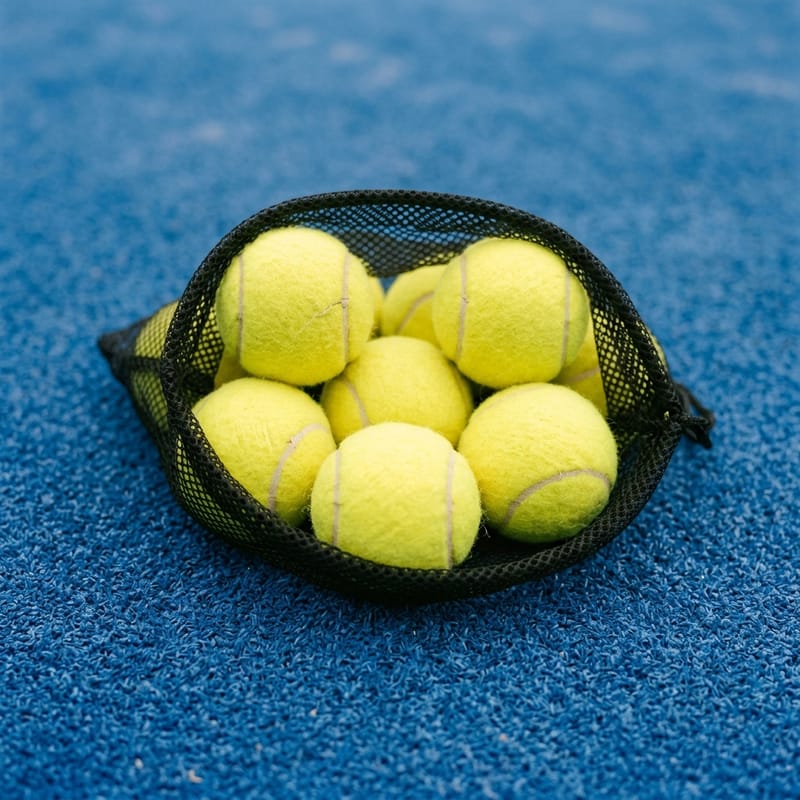
Open a fresh tube of padel balls, play two matches, and they already feel dead - flat, low-bouncing and lifeless. That is not your imagination, and it is exactly the problem a ball pressuriser solves. For a small one-off cost, it keeps your balls at close to their factory pressure for weeks instead of days. Here is how they work, whether they are worth it, and what to look for.
Why do padel balls go flat?
Padel balls are pressurised: they hold air at a higher pressure inside than the air around them. The International Padel Federation specifies an internal pressure of roughly 10-11 psi, which is what gives a fresh ball its lively bounce.
That pressure is the problem. Air always migrates from high pressure to low, so the moment a ball exists it is slowly leaking - even sealed in its can. Once you crack the can open, the surrounding air is lower-pressure still, and the leak accelerates. Within a couple of matches the internal pressure has dropped enough that the bounce noticeably dies. The rubber and felt are usually fine; it is the lost air pressure that kills the ball.
How does a padel ball pressuriser work?
A pressuriser is simply an airtight container you store the balls in between sessions, held at a pressure higher than normal room air. Because the chamber is pressurised, the pressure gradient that was draining your balls is reversed: air diffuses back into the balls instead of out of them, maintaining - and over time partially restoring - their internal pressure and bounce.
Two mechanisms are common. Pump-style pressurisers have you add a few pumps of air to pressurise the chamber (cheaper, but you top it up manually). Mechanical / screw-down models compress the air space by tightening a lid to reach the target pressure, and the most advanced automatic units hold a set pressure for you. All three achieve the same end: a storage pressure above ambient so the balls stop leaking.
Are padel ball pressurisers worth it?
For anyone who plays regularly, yes - the maths is straightforward. A tube of decent padel balls costs around £8-£12 and many players bin them after two or three matches once the bounce dies. A pressuriser keeps that same tube playable for many more sessions - players routinely report doubling or tripling the usable life. At that rate a £20-£40 pressuriser pays for itself within a few weeks of regular play, and you get the bonus of always playing on correct-pressure balls rather than dead ones.
The case is weakest for very occasional players: if you play once a month, your balls go stale from age regardless, and the saving is small. But for a weekly player - or anyone with a ball machine chewing through balls - it is one of the best-value accessories in the sport.
Which padel ball pressuriser should you buy?
A few established options cover the range:
- Pressureball - a well-known pressuriser brand available in the UK, designed to hold balls at playing pressure without losing it over time. A reliable default.
- TuboPlus / TuBall - screw-down tube pressurisers with adjustable pressure control, popular in the padel world and sized for standard ball tubes.
- Automatic units (e.g. Pressurebox-style) - hold a set pressure for you with no manual topping up; more expensive but the most convenient if you store a lot of balls.
- Capacity and pressure control - check how many balls it holds (a single tube vs a larger box) and whether it lets you set the target pressure rather than a fixed level. Match it to how many balls you get through.
Whatever you choose, store the balls in it as soon as you finish playing - the sooner they go in, the less pressure they lose. Pair it with a good set of padel balls and you will get far more court time per tube.
Shop padel balls and accessories
Pressurisers, balls and court gear from UK padel specialists. Check current prices.
Frequently asked questions
Do padel ball pressurisers actually work?
How much longer will my padel balls last with a pressuriser?
Is a ball pressuriser worth it for a casual player?
What pressure should padel balls be?
Can I use a tennis ball pressuriser for padel balls?
Choosing balls too?
Our padel balls guide covers the best tubes to keep bouncy in your new pressuriser.