Padel for Tennis Players: The 5 Biggest Adjustments
Coming to padel from tennis? Scoring is identical, but five things need unlearning: wall play, racket weight, swing, net position and the serve.
Tennis players have a real head start in padel: the scoring is the same, the hand-eye coordination transfers, and you already read a ball off a racket. But the instincts that win tennis points actively lose padel points until you retrain them. These are the five adjustments that take a competent tennis player from flailing to genuinely good - and the order they tend to click.
Padel is a racket sport played in doubles on an enclosed court where the walls are in play - think of it as tennis crossed with squash. If you want the full side-by-side, our padel vs tennis comparison covers court, kit and rules; this guide is purely about adapting your existing tennis game.
1. The walls are your friend, not the end of the point
This is the single biggest unlearn. In tennis, a ball past you is gone. In padel, a ball that beats you off the back glass is a normal, playable shot - it rebounds off the wall and you take it on the way back, the way a squash player would. New tennis converts instinctively give up on balls heading for the back wall; learning to turn, let it bounce off the glass and play it calmly is what separates a confused first session from an enjoyable one.
The same applies on defence: when you are lobbed, the back wall buys you time rather than ending the rally. Trust the glass, wait for the rebound, and play your shot from the controlled position the wall hands you.
2. Shorten the swing - this is not a baseline rally
Tennis groundstrokes are built on long, full swings with big follow-through. In padel's smaller court, that swing is too big and too slow: you will hit long, catch the side glass on your backswing, and arrive late to the next ball. The padel stroke is compact and punchy - more of a controlled block or short push than a full drive. Tennis players who keep their swing short and let the racket do the work adapt fastest; those who try to crush every ball spend the first month spraying it out.
3. Drop to a much lighter racket
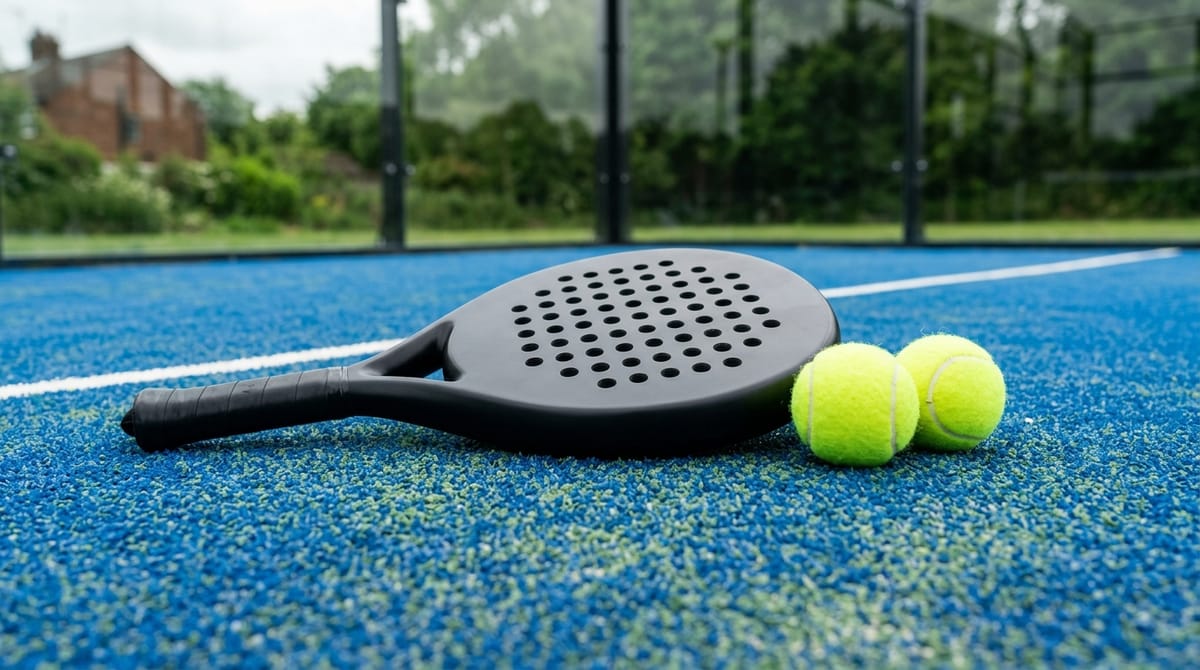
A padel racket is a different tool: solid, stringless, and far lighter than a tennis racket, typically around 360-380 grams. Coming from a heavier tennis frame, your timing will be early and your wrist will over-work until you adjust. Start with a round-shaped, control-oriented racket rather than a head-heavy power frame - the forgiving sweet spot helps you find the timing, and you can move to a more aggressive shape once your strokes settle. Our guide to choosing a padel racket walks through weight, balance and shape in detail.
4. The net is home, not a gamble
In modern tennis, approaching the net is a calculated risk. In padel it is the default winning position - the team that controls the net wins the large majority of points, and the whole tactical game is about getting there and staying there. Tennis players used to anchoring at the baseline have to flip this instinct: get forward, hold the net as a pair, and use the lob to push opponents back rather than trading groundstrokes from the back of the court. Thinking of padel as a doubles-positioning game first and a ball-striking game second is the mental shift that unlocks it.
5. The serve is underarm - and it matters less
Forget the kick serve. The padel serve is underarm: you bounce the ball, then strike it below waist height into the service box. There is no first-serve weapon to build a game around, so the serve is about placement and starting the rally on your terms, not winning the point outright. Tennis players often over-think this - it is genuinely simpler than a tennis serve, and once you accept that you are giving up your biggest tennis weapon, you stop trying to force it and focus on getting to the net behind it.
Everything else you know about scoring carries straight over - games, sets and tiebreaks work exactly as in tennis, so there is no learning curve there. If you want to confirm the details, our padel scoring guide and padel rules guide have the specifics.
What tennis habits hurt you most in padel?
Three in particular. Over-hitting: the full tennis swing sends the ball long on the shorter court. Abandoning balls headed for the back wall: in padel those are routine plays off the glass. And camping at the baseline: it concedes the net, which is where padel points are won. Catch yourself doing any of these and you have found your next thing to drill.
Frequently asked questions
Is padel scoring the same as tennis?
Will my tennis serve work in padel?
Do I need a different racket for padel?
How long does it take a tennis player to get good at padel?
Padel vs Tennis: How They Differ
How to Choose a Padel Racket UK 2026
Padel Rules Explained 2026