How to Choose a Padel Racket UK 2026: Weight, Balance, Shape
How to choose a padel racket UK 2026 - decision framework by player level, head shape (round/teardrop/diamond), weight, balance, and core type.
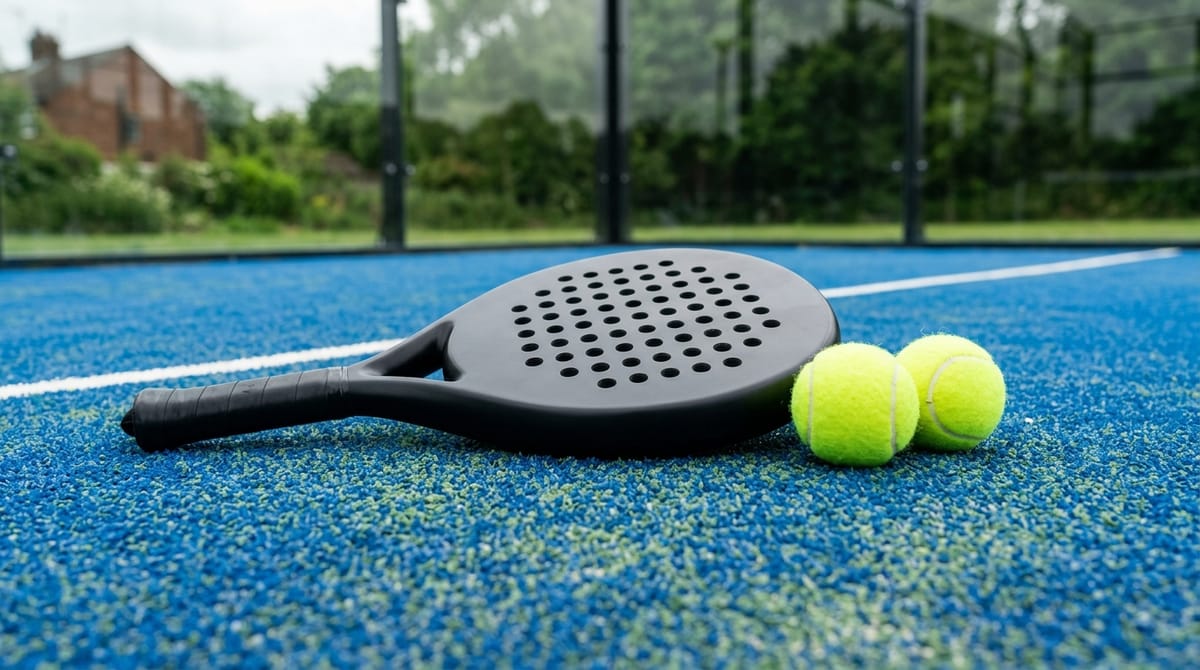
Walk into a UK padel retailer in 2026 and you face 80+ rackets ranging from £40 to £300. The marketing copy is uniformly enthusiastic about every model. The trick is knowing which factors actually matter for your level and playing style - and which are marketing noise. This guide gives you a four-step decision framework: player level → head shape → weight + balance → core + carbon spec. Apply it in that order and you'll buy the right racket the first time.
Step 1: Be honest about your player level
The single biggest predictor of which racket you'll enjoy is your actual playing level - not the level you aspire to. Three categories matter:
- Beginner (first 50 hours of court time). Swing mechanics are still forming. You need maximum forgiveness, not maximum power. Round head + neutral balance + £80-£150 is the right zone.
- Intermediate (50-300 hours). Swing fundamentals exist but inconsistent. Sweet-spot mishits are still common. Round head or teardrop, 355-365g, £150-£220 is the right zone.
- Advanced (300+ hours, club competition or higher). Established mechanics. Style preferences clear. Any head shape works depending on game; £200-£290 is the right zone.
Players consistently buy above their level. The result is the £290 diamond racket that feels demanding for 18 months until they sell it on at a 40% loss. Stay one level below your aspiration; you'll improve faster.
Step 2: Pick head shape from your playing style
Three head shapes; each suits a different game:
Round head (control). Sweet spot centred low-on-frame; forgiving on mishits; lower peak power. Best for beginners, defensive players, players who win through shot selection. Examples: Head Delta Pro (around £150 advanced), Bullpadel Hack Comfort (£180 intermediate), Adidas Adipower (£150 beginner).
Teardrop (balanced). Sweet spot mid-frame; balanced power-versus-control trade-off. Best for all-round players who attack and defend equally. Examples: Babolat Technical Viper (£270 advanced), Head Coello Vibe (£140 intermediate), Adidas Metalbone (£200 intermediate-advanced).
Diamond head (power). Sweet spot high-on-frame; small effective area; maximum peak power. Best for advanced front-court attackers. Examples: Babolat Air Veron (£280 advanced), Head Coello Pro (£302.99 RRP, usually selling below that, advanced), Bullpadel Vertex 04 (2025 flagship spec, advanced - now sells well below its £297.99 RRP since the Vertex 05 superseded it).
If you don't know your style yet, choose round. You can move to teardrop or diamond once your game develops.
Step 3: Weight and balance
Weight matters less than people think; balance matters more.
Weight (350-380g). Most modern padel rackets sit in 350-380g. Lighter (350-360g) means faster racket-head speed but less power on smashes. Heavier (370-380g) means more power but slower reactions at the net. Pick lighter if you have any wrist concerns or play tactical defence; heavier if you're a confident front-court attacker.
Balance (250-280mm). Measured from grip end. Neutral balance is 250-260mm; head-heavy is 270+mm; head-light is below 250mm. Neutral feels manoeuvrable; head-heavy adds power but slows reactions. Diamond rackets are always head-heavy; round rackets are usually neutral; teardrops fall in between.
If buying online without a try, prefer the lighter / more neutral option. You can grow into more weight; you can't shrink it.
Step 4: Core and carbon spec (the small differences)
Once head shape and weight/balance are settled, the construction differences are real but smaller:
- Carbon faces. 3K, 12K, 18K, or 24K carbon - higher numbers mean more carbon strands per bundle. 12K is the mainstream premium; 18K-24K is at flagship tier.
- Core foam. EVA (rubber) is standard. Soft EVA = forgiveness + vibration damping. Hard EVA = more power + more feedback. Beginners and players with elbow concerns should pick soft.
- Frame structure. Auxetic yokes (Head), Pulse System (Bullpadel), Spider Texture (Babolat) - these brand-specific reinforcement systems add modest stability. Real differences are 5-10% not 30%.
If you've made the right decisions on level, head shape, and weight/balance, the construction details affect feel more than performance. Worth tweaking when you have a clear preference; not worth obsessing over for first purchase.
What about price?
Three price tiers map to different player levels:
Entry tier (£40-£100). Generic-brand rackets, basic foam construction, often single-shape (round). Good for first 30-50 hours; replace once you start playing weekly.
Mid tier (£100-£200). Brand rackets (Head, Bullpadel, Adidas, Babolat) with proper construction. The sweet spot for intermediate-level players; lasts 200-400 hours of play.
Premium tier (£200-£300). Flagship signature rackets from major brands. Only worth the spend at solid 4.0+ tournament level - below that, the £100 difference doesn't show in match results.
For most UK amateur players, the £150-£200 zone is the right spending target. Premium tier becomes worth it only when you're at club championship level or higher.
Frequently asked questions
Choosing for a specific need?
The steps above cover the general case. Some players are choosing around one priority rather than working through the whole ladder, and those are worth treating separately:
- Coming from tennis, where the instinct is a heavier, longer swing: rackets for tennis players.
- Building a game around heavy topspin and kick: rackets for spin.
- Wanting a lighter frame or a smaller grip without dropping to a beginner spec: rackets for women.
- Deciding between two of the biggest brands: adidas vs Babolat.
Should I buy used or new? Used rackets in good condition (<200 hours) at 50-60% of new price are good value if you can verify condition. Watch for cracks in the head frame (visible under angled light) and worn carbon faces. Sub-£100 used purchases from established UK retailers are lower risk than online marketplaces.
How often should I replace my racket? Modern padel rackets last 300-600 hours of regular court time before frame stress shows. At 2 sessions per week, that's 18-30 months. Replace sooner if you develop a recurring shanking pattern or if a visible crack appears.
Are signature rackets worth the premium? Sometimes. The signature endorsement signals manufacturer quality control (tour players reject substandard batches). But the £20-£50 signature premium is often pure marketing. Compare the spec sheet directly against the non-signature equivalent before paying extra.
Can I demo before buying? Some UK retailers (Pure Racket Sport, All Things Tennis) run demo programmes - typically £15-£25 per racket per 7 days, deductible from purchase. Always demo if buying at the £200+ tier.
What about racket weight when ageing? Players over 50 should typically pick the lighter end of the 350-380g range to manage shoulder/wrist longevity. Lighter rackets also help if you're returning from a shoulder injury.