The Gancho (Hook Smash) in Padel UK 2026
The gancho or hook shot in padel explained: the advanced overhead that rescues a high ball escaping off the side glass, when to use it and how to hit it.
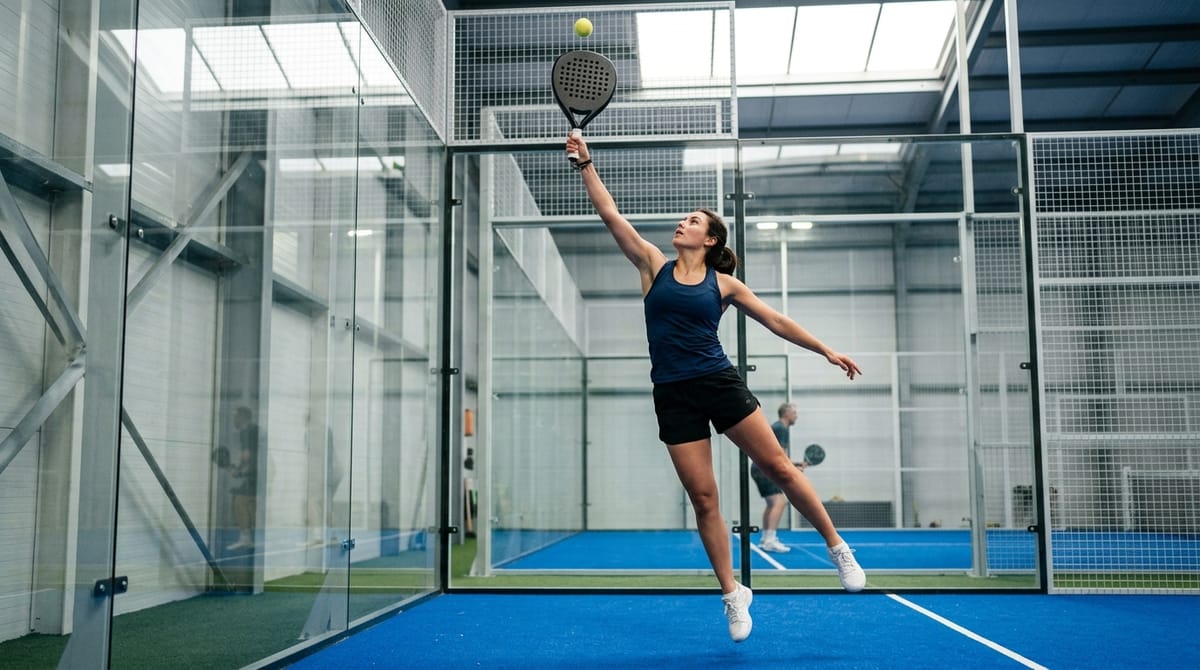
The gancho is one of padel's most spectacular shots, the hooking overhead a player wraps around a ball that is sailing out the side of the court. It turns a near-lost point into an attacking one, and while it is firmly an advanced skill, understanding it helps every player read the high balls that drift toward the side glass.
What is the gancho in padel?
The gancho, Spanish for hook, is an overhead shot played to a high ball that has rebounded off the side glass and is travelling sideways out of the court. In padel (an enclosed-court racket sport where the walls keep the ball alive), a ball escaping out the side after a side-wall bounce is one of the hardest to deal with. Rather than letting it go, you hook the racket around the outside of the ball and brush across it, wrapping spin on to redirect it back into the court. The motion looks like reaching up and pulling the ball back from over your shoulder.
When should you play a gancho?
The gancho is a situational, last-resort attacking shot. You use it when a lob has been pushed wide, bounced off the side glass high, and is now heading out of the court past your shoulder, too far across your body to hit a normal vibora or smash. If the ball is comfortably in front of you, a standard overhead is always the higher-percentage choice. The gancho is what you reach for only when the ball would otherwise escape and the alternative is losing the point outright.
How do you hit a gancho?
Use a continental grip and turn side-on to the side wall, tracking the ball over your shoulder as it comes off the glass. Reach up and slightly behind, then hook the wrist around the outside edge of the ball, brushing across and down to wrap spin on it. The contact is more of a whipping, pulling action than a flat strike, and the spin is what curls the ball back into the court instead of following it out. Aim to redirect it cross-court, away from the net players, and recover your balance quickly because the reach leaves you stretched.
How is the gancho different from the vibora and smash?
All three are overheads, but they answer different balls. The smash finishes a high, central ball with power. The vibora attacks a slightly lower ball with side-spin while keeping you at the net. The gancho is the emergency option for a ball that has gone past your shoulder and is escaping out the side after a side-glass bounce, where neither of the others can reach. It trades power for the ability to wrap the ball back into court from an awkward, stretched position. Think of it as the recovery shot at the far end of the overhead family.
What are the most common gancho mistakes?
The first mistake is reaching for a gancho when a simpler overhead would do; it is a low-percentage shot, so only use it when genuinely stretched. Second is trying to hit it flat and hard rather than brushing across the ball, which sends it straight out of the court instead of curling it back. Third is neglecting the recovery: the shot leaves you off balance and out of position, so if you do not move back quickly your partner is left exposed. Build the standard overheads first with our positioning guide before relying on the gancho.
How can you practise the gancho?
Because it is so situational, drill it deliberately. Have a partner feed lobs that land deep and wide so they kick high off the side glass and head out of the court, then practise hooking them back cross-court, focusing only on the brushing wrist action and the spin, not power. Start by simply keeping the ball in play, then progress to placing it away from the imaginary net players. It is an advanced add-on, so make sure your smash and back-glass defence are reliable first; the gancho rewards players who already read high balls well.
Frequently asked questions
What is a gancho in padel?
When should you use the gancho?
Is the gancho a difficult shot?
How is the gancho different from a smash?
The Vibora Shot in Padel UK 2026
The Padel Smash (Remate): How to Hit It

How to Play Off the Back Glass in Padel