Padel Racket Care: How to Look After and Replace It
How to care for a padel racket and know when to replace it. Storage, cleaning, the warning signs of a dead racket, and how long one should last.
A padel racket is a consumable, not a lifetime purchase, but a little care doubles the time it stays at its best. The carbon and fibreglass faces and the foam core inside break down with impact and temperature, so how you store and treat the racket matters as much as how you hit with it. This guide covers the simple habits that protect a racket and the clear signs that tell you it is time to replace one.
How do you store a padel racket?
Store the racket indoors at room temperature, ideally in a padded cover or a bag with a thermal lining. The two enemies are heat and cold: a sun-baked car, a freezing garage, or a windowsill in direct sun all stress the core (the foam centre that gives the racket its feel) and the bond between it and the faces. Keep it dry too, because trapped moisture degrades the materials over a season. A racket left flat in a bag away from temperature swings will outlast one rattling around a car boot many times over.
How do you clean and protect a padel racket?
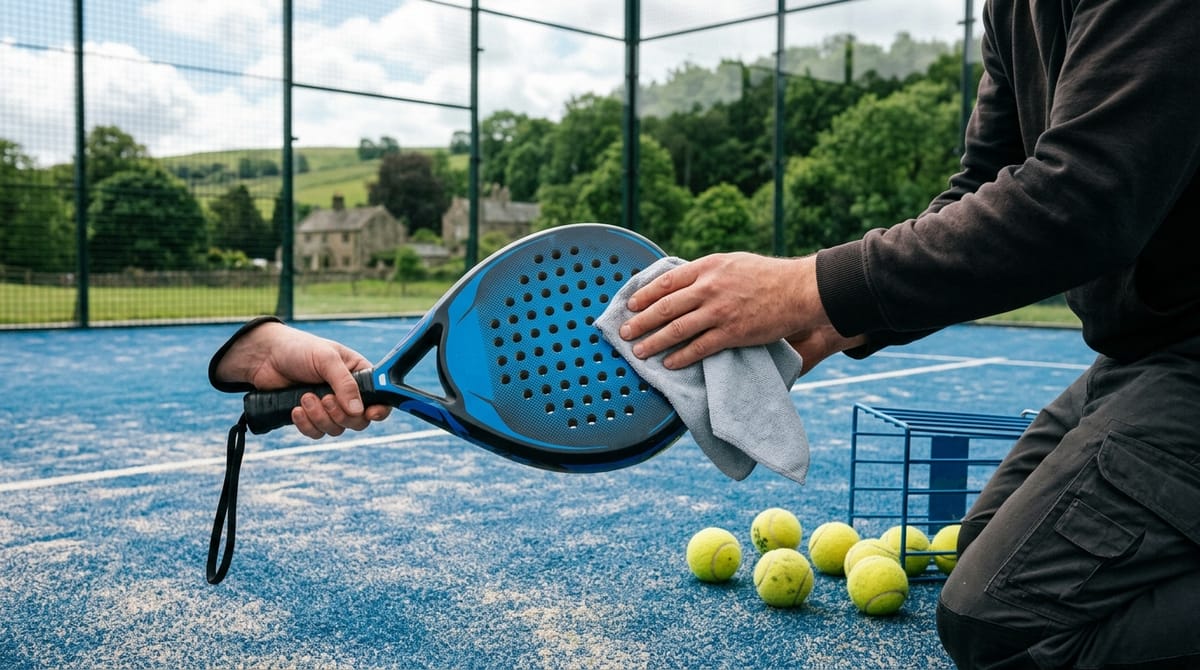
Wipe the faces and frame with a slightly damp cloth after dusty or sandy sessions, then dry it. Avoid harsh chemicals, which can attack the resin. The biggest avoidable damage is cosmetic-turned-structural: scraping the frame on the court when you scoop a low ball, or clipping the glass and the posts. A protector tape along the head guards the frame edge and is cheap insurance on a premium racket. Replace the overgrip regularly so you are not gripping harder to compensate for a slick handle, which strains both the racket and your arm.
Use a cover
A padded sleeve protects against knocks and temperature swings in transit.
Fit head protector tape
Guards the frame edge from scoop shots and glass clips.
Wipe down after play
Remove grit and moisture with a damp cloth, then dry.
Refresh the overgrip
A fresh overgrip keeps your hold light and protects the handle.
What are the signs a padel racket is worn out?
A padel racket rarely fails all at once; it fades. Watch for these signals that the core or structure is going:
Visible cracks
Any crack in the face or frame means the racket is unsafe to keep using and will only get worse.
Dead or soft spots
Areas of the face that feel mushy and return no power show the foam core has broken down.
A sudden loss of power or feel
If shots that used to fly now sit up, the core has likely degraded even without visible damage.
Rattles or movement
A loose, rattling feel suggests the core has separated from the faces (delamination).
How long should a padel racket last?
It depends almost entirely on how often you play. A casual player who is on court once a week can expect a good racket to stay at its best for two to three years. Someone playing several times a week, especially a hard hitter, may notice the core softening within a year. Cheaper rackets with lower-grade foam tend to lose their feel faster than premium frames, which is one of the hidden costs of a budget pick. When the feel goes, no amount of care brings it back: the core is a wear item. Our best padel rackets guide is the place to start when it is time for a new one.
When should you replace versus repair?
For practical purposes, padel rackets are not economically repairable. A cracked frame or a delaminated core cannot be restored to its original feel, and there is no widespread repair trade as there is for tennis stringing. The sensible approach is preventative care to extend the life, then a clean replacement once the feel fades or damage appears. If you are unsure which way your next purchase should go, our guide to choosing a padel racket walks through weight, balance and shape.
Best Padel Rackets UK 2026: A Buyer's Guide
How to Choose a Padel Racket UK 2026
Padel Overgrip Guide UK 2026