How to Return Serve in Padel UK 2026
How to return serve in padel: where to stand, the best low return or lob, hitting the ball off the back glass, and the move to the net that wins points.
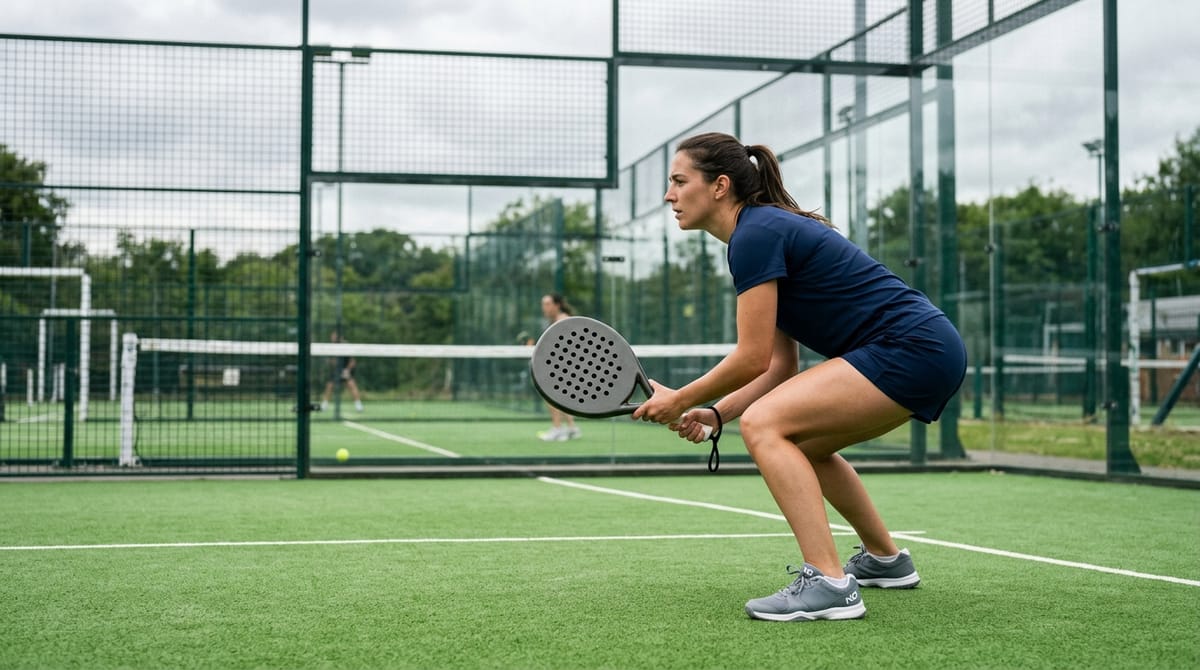
In padel the return of serve is a battle for the net, not a chance to blast a winner. The serve is deliberately gentle, hit underarm, so the real question is how you use your return to move from the back of the court up to the dominant net position. Get it right and you flip the point in your favour before it has really begun.
Why is the return so important in padel?
Padel (an enclosed-court racket sport) is won at the net, and the serving pair starts the point at the back. That means the returner has a rare early chance to take the net first. A good return forces the servers to play a difficult, low volley as they come forward, buying you and your partner time to advance. A poor, floating return lets them volley comfortably and keep you pinned at the back. The return is therefore one of the most decisive shots in the game, even though it is rarely flashy.
Where should you stand to return serve?
Stand near the back of your service box, around the level of the back wall, so you have time to read the serve and let it come to you. Position yourself to cover your forehand or backhand depending on where the server is aiming, and stay in an athletic, balanced stance with the racket up. Crucially, expect the ball to come off the back glass: many serves are designed to bounce and rebound off the wall, so be ready to take the return after that rebound rather than rushing it. Our back-glass guide covers that wall read in detail.
What is the best type of return?
Two returns dominate. The first is a deep, low drive aimed at the feet of the servers as they move forward, forcing them to volley up so you can attack the reply. The second is a lob over the incoming server, which pushes the serving pair back and lets you take the net unopposed. Mixing the two keeps the servers guessing. The shot to avoid is a high, slow return through the middle, which sits up perfectly for an easy first volley. Whichever you choose, follow your return forward; the return and the move to the net are a single play.
How do you actually hit the return?
Keep the swing short and controlled. Use a continental grip, take a compact backswing, and meet the ball out in front with a firm wrist, brushing slightly low to high for a touch of control. You are guiding the ball, not crushing it, so prioritise placement and a low net-skimming trajectory over power. Watch the ball onto the strings, especially when it has come off the back glass, and recover your balance immediately so you can advance. A calm, repeatable return beats an ambitious one that leaks errors.
What are the most common return mistakes?
The biggest is going for too much: trying to hit a winner off a gentle serve usually produces an error or an attackable ball. Keep it low and controlled. Second is returning and staying back, which wastes the whole point of a good return; you must move forward behind it. Third is mistiming the ball off the back glass by playing it too early; let it come to you. Fourth is standing too far forward and getting jammed by a serve that kicks off the wall. Newer players should build the basics with our beginner's guide first.
How can you practise returning serve?
Have a partner serve repeatedly while you focus only on a low, controlled return to their feet, then immediately step forward to the net. Alternate that with practising the return lob, aiming to land it deep behind the incoming server. Add the back-glass read by having serves played wide so they rebound off the wall, training you to wait and take the return after the bounce. Keep score of how often your return lets you reach the net successfully, because that, not the cleanness of the strike, is the real measure of a good padel return. Tie it together with our doubles tactics guide.
Frequently asked questions
What is the best return of serve in padel?
Where should you stand to return serve in padel?
Should you attack the return in padel?
How do you return a serve that bounces off the back wall?
How to Serve in Padel

How to Play Off the Back Glass in Padel
Padel Court Positioning Fundamentals UK 2026