Padel vs Squash: Which Should You Play? (UK 2026)
Padel vs squash compared for UK players: court, equipment, intensity, learning curve, cost and social appeal - and which racket sport suits you best.
Padel and squash get lumped together because both are played off walls indoors, but that is where the similarity ends. One is a relaxed, tactical doubles game; the other is one of the most physically punishing racket sports there is. If you are deciding which to take up - or weighing padel against the squash you already play - here is an honest comparison across the things that actually matter.
Padel vs squash at a glance
Key differences
- Players
- Padel: doubles (4). Squash: mostly singles (2)
- Court
- Padel: 10x20m, glass + mesh walls. Squash: ~6.4x9.75m, fully enclosed
- Racket
- Padel: solid, stringless, perforated. Squash: strung, teardrop frame
- Ball
- Padel: low-compression, tennis-like. Squash: small, hollow rubber
- Walls in play
- Padel: yes, ball plays off them. Squash: yes, front wall is central
- Intensity
- Padel: moderate, tactical. Squash: very high, continuous
- Learning curve
- Padel: easy to start. Squash: steeper
- Social feel
- Padel: very social. Squash: intense, one-on-one
How do the courts and equipment differ?
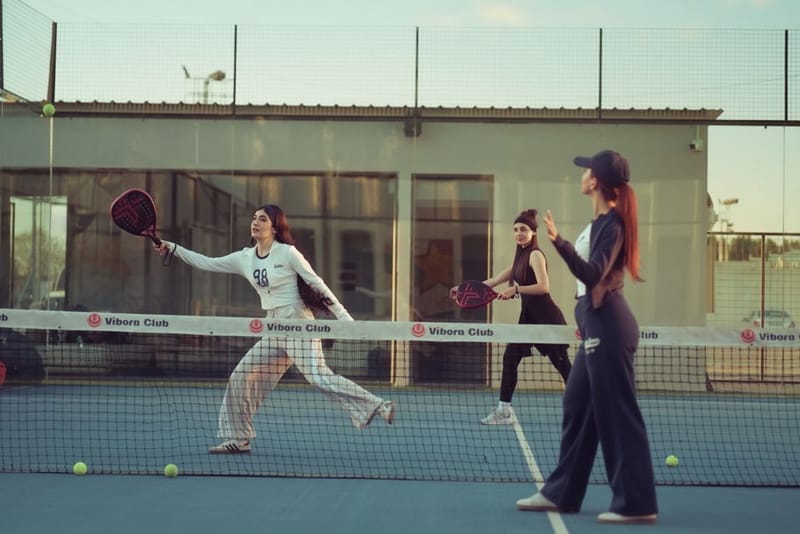
Squash is played on a smaller, fully enclosed court where both players share the same space and hit off the front wall. Padel is played on a larger, glass-and-mesh-walled court, divided by a net like tennis, with two players a side. In padel the back and side walls are part of the game - you can play the ball after it bounces off them - but the court is split, so you are not sharing the same square metre as your opponent the way squash players do.
The kit is different too. A padel racket is a solid, stringless bat with holes and a low-compression ball, while squash uses a conventional strung racket and a small, hollow rubber ball that needs warming up to bounce. Squash players are also strongly advised to wear eye protection, because the small, fast ball carries a genuine eye-injury risk in the enclosed court.
Which is the better workout?
If pure cardio intensity is your goal, squash wins comfortably - it is routinely ranked among the most demanding racket sports, with near-constant sprinting, lunging and twisting in a confined space. A squash match will leave most people far more drained than a padel one.
Padel is still a genuine workout - plenty of movement, reactions and repeated effort - but it is more moderate and stop-start, shared across four players, and more about positioning and touch than relentless running. That makes it more accessible and easier on the joints, which is a big part of its appeal to a wider age range. Our guide to whether padel is good exercise goes deeper on this.
Which is easier to learn?
Padel, clearly. Its biggest strength as a beginner sport is that the walls keep the ball in play, so rallies last and you feel competent within a session or two. The underarm serve and doubles format also lower the barrier. Squash is much harder to enjoy early on - the ball dies quickly, rallies are short until your technique and fitness develop, and the solo format gives you nowhere to hide. Beginners almost always find padel the more immediately rewarding of the two.
Cost, courts and the social side
Squash has a long-established footprint in UK leisure centres and clubs, though court numbers have declined over the years. Padel is the opposite - booming, with new clubs opening fast, but still fewer locations overall, so availability depends heavily on where you live; our where to play padel guide maps the UK scene.
On cost, court-hire prices are broadly comparable, but because padel is doubles you split the fee four ways, often making it cheaper per person. The social difference is the clincher for many: padel is inherently sociable - four players, easy chat between points, glass walls that invite spectators - while squash is an intense one-on-one contest. Neither is better; they simply suit different moods and different people.
So which should you play?
Choose padel if you want a fun, social game you can enjoy quickly with friends or family, prefer doubles, want something easier on the body, or are coming back to sport after a break. Choose squash if you want the most intense cardio workout in a small footprint, enjoy one-on-one competition, like a steeper technical challenge, or already have courts handy. And there is no rule against both - the racket skills cross over, and many players use squash for fitness and padel for the social side. If you are leaning padel, start with our beginner's guide.
Frequently asked questions
Is padel easier than squash?
Which burns more calories, padel or squash?
Can a squash player switch to padel easily?
Is padel or squash more popular in the UK?
Do I need eye protection for padel or squash?
Padel vs Tennis
Padel vs Pickleball
Is Padel Good Exercise?