Padel Footwork Drills UK 2026
Padel footwork drills to move better: the split step, lateral shuffles, the side-on cross-step, solo shadow drills, and the mistakes that slow you down.
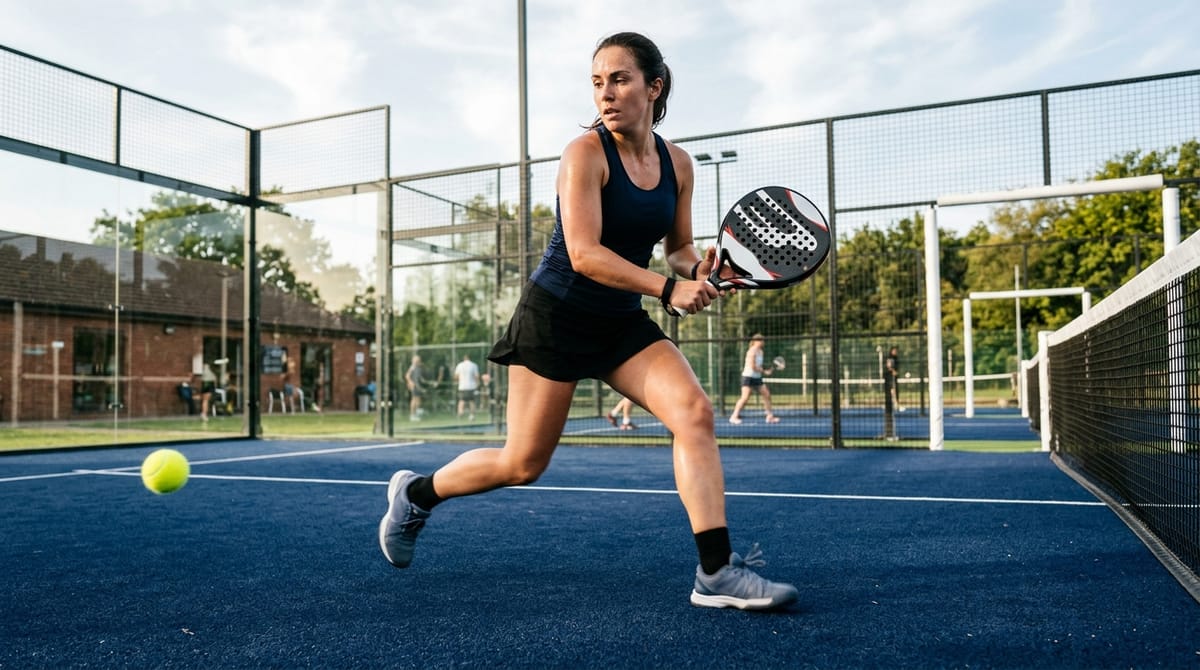
Padel is a game of small spaces and quick adjustments, so footwork decides far more points than power does. Get to the ball early and balanced and even an average swing works; arrive late or off balance and the best technique falls apart. These drills build the movement habits that make everything else easier.
Why does footwork matter so much in padel?
In padel (an enclosed-court racket sport played on a small enclosed court), you are rarely far from the ball, so the challenge is precise positioning rather than raw speed. Good footwork gets you to the ball early, balanced and side-on, which is what lets you play a controlled bandeja, a clean volley or a tidy shot off the back glass. Poor footwork leaves you reaching, off balance and late, turning makeable shots into errors. Because the rallies are long and the spaces are tight, efficient movement also saves the energy you need for the decisive points.
What is the split step and how do you drill it?
The split step is the foundation of all padel movement: a small hop that lands lightly on the balls of both feet just as your opponent strikes the ball, leaving you balanced and ready to push off in any direction. To drill it, stand in your ready position and have a partner (or your own rhythm) signal a hit; time a small split so you land exactly on that signal, then push off toward an imaginary ball. Repeat until the split happens automatically before every shot. It is the single most valuable footwork habit you can build.
Which drills improve net movement?
At the net you mostly move sideways and forward in short, controlled steps. The lateral shuffle drill is the core one: set two cones a couple of metres apart and shuffle between them staying low, never crossing your feet, with a split step at each change of direction. Add a forward element with an up-and-back drill, stepping in to meet a high volley then recovering, which trains the transition between the net line and a step back for an overhead. Keep the steps small and the centre of gravity low; tall, lunging strides leave you unbalanced for the next ball.
Which drills improve back-court movement?
Moving back for a ball heading to the glass needs a side-on cross-step rather than backpedalling. Drill it by turning side-on to the side wall and moving back with a crossover step, keeping your eyes on an imaginary ball over your shoulder, then setting your feet to play it after the rebound. This pairs directly with the skill in our back-glass guide. A second useful pattern is the recovery drill: after moving wide or back, practise returning quickly to your base position with small steps, because being out of position for the next ball is what most often costs a point.
How can you train footwork on your own?
You do not need a court or a partner. Shadow drills, where you move through the patterns above with no ball, are excellent and can be done anywhere with a little space. An agility ladder sharpens quick, light foot contacts and split-step timing. Cones or any markers let you set up shuffle and cross-step patterns at home. Even five or ten minutes of deliberate movement practice a few times a week builds the balance and timing that show up immediately on court. Add the tactical context with our positioning fundamentals.
What are the most common footwork mistakes?
The biggest is skipping the split step, which leaves you flat-footed and slow to react. Second is standing too upright; staying low keeps you balanced and ready to change direction. Third is taking big, lunging steps instead of small adjusting ones, which means you arrive off balance and cannot set your feet for the shot. Fourth is backpedalling toward the glass instead of turning side-on, which is slow and leaves you facing the wrong way. Fix the split step and the low, small-step habit first, and the rest follows. Beginners should pair this with our beginner's guide.
Frequently asked questions
What is the most important footwork skill in padel?
How do you move back for a ball off the glass?
Can you practise padel footwork without a court?
Why should you stay low when moving in padel?
Padel Court Positioning Fundamentals UK 2026
How to Play Off the Back Glass in Padel
The Padel Volley: Technique and Tips (2026)