The Padel Volley: Technique and Tips (2026)
Padel volley technique explained: the continental grip, ready position, the split step, a short punchy stroke, forehand vs backhand, and common mistakes.
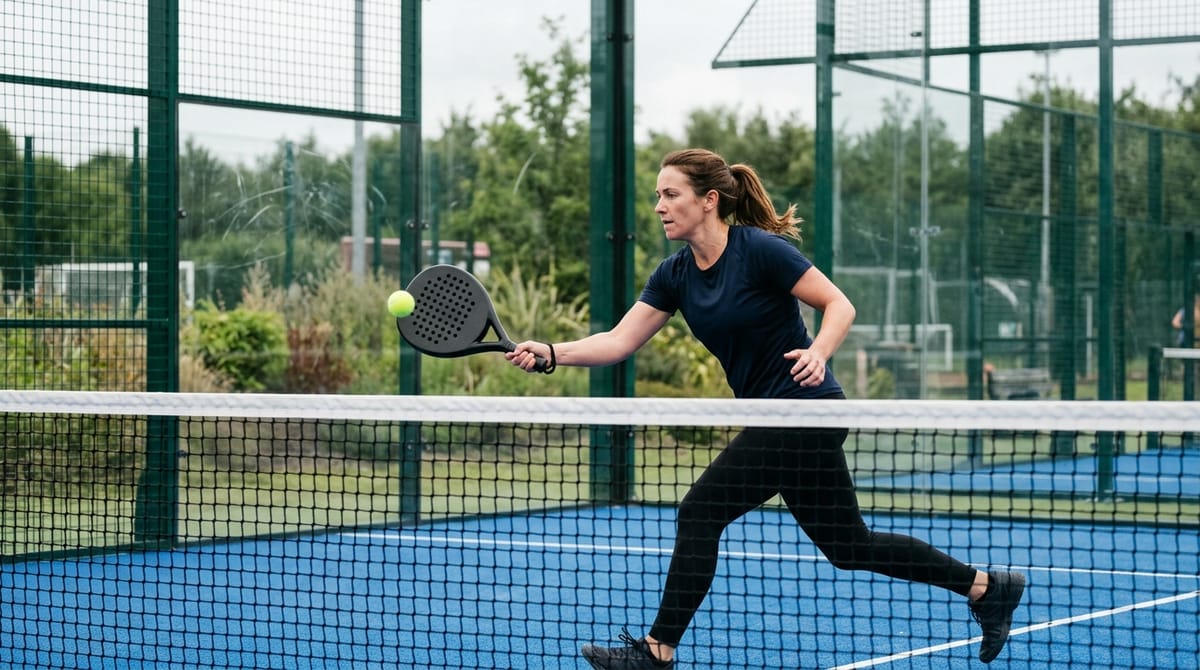
Padel is won at the net, and the volley is the shot that keeps you there. It is not about power; it is about a short, controlled punch that drops the ball at your opponents' feet and forces a weak reply. Master a tidy volley and you control the rhythm of almost every point.
What is a volley in padel?
A volley is any ball struck out of the air before it bounces, played from the net position. In padel (an enclosed-court racket sport where holding the net is the key advantage), the volley is the shot you use to keep opponents pinned at the back and to take time away from them. It comes in forehand and backhand versions, and the goal is rarely an outright winner; more often it is a controlled, low ball that sets up the point you finish with a smash or vibora.
What grip and ready position do you need?
Use a continental grip, which lets you play both forehand and backhand volleys without changing your hand. Stand in an athletic ready position with the racket held up and slightly in front of your body, head height, elbows relaxed and away from your sides. From there you can react either way without reaching. The single most important habit is the split step: a small hop that lands as your opponent strikes, so your weight is balanced and you can push off instantly toward the ball.
How do you hit a controlled volley?
Keep the swing short. Take the racket back no further than your shoulder, turn slightly side-on, and punch forward to meet the ball well in front of your body. The wrist stays firm, and a slight high-to-low path puts a little underspin on the ball, which helps it stay low and controlled. Contact should be crisp and brief, almost a block for a fast ball and a short punch for a slower one. Follow through only a little; a long swing is what sends volleys flying. Aim down at your opponents' feet rather than for the lines.
How do forehand and backhand volleys differ?
The principles are the same, but the backhand volley is where most players struggle. On the forehand, turn the shoulder and punch across the body. On the backhand, lead with the elbow and the front shoulder, keeping the racket head up and punching through with a firm wrist; many players find the backhand volley actually more stable because the arm structure is naturally compact. Practise both equally, because opponents will quickly target whichever side is weaker. Your base position and movement come from the court positioning fundamentals.
What are the most common volley mistakes?
Three errors spoil most volleys. First, too big a swing: a full backswing turns a control shot into a gamble, so shorten everything. Second, a loose wrist that flicks at the ball, which kills accuracy; keep it firm and let the body punch the racket through. Third, letting the ball drop too low or playing it too late, which forces you to scoop upward and float an easy ball back; take the volley early and in front. Skipping the split step underlies all three, because without it you are never balanced enough to play a short, controlled stroke. Beginners should build the basics with our beginner's guide.
How can you practise the volley?
Start with a partner gently feeding balls to one side while you focus only on a short, firm punch and contact in front, ignoring power entirely. Add a split step before every shot so it becomes automatic. Progress to alternating forehand and backhand feeds to train quick racket changes, then to faster feeds that force you to block rather than swing. A useful drill is to aim every volley to land in the service box at your opponents' feet, training placement over pace. Tie it together with the patterns in our doubles tactics guide.
Frequently asked questions
What grip should you use for padel volleys?
Why do my volleys keep flying long?
Should you volley with topspin or underspin?
What is the split step and why does it matter for volleys?
Padel Court Positioning Fundamentals UK 2026
The Bandeja Shot in Padel UK 2026
Padel Doubles Tactics and Positioning UK 2026