Playing Padel in the Rain and on Wet Courts
Can you play padel in the rain? Why wet courts are slippery and risky, how indoor and covered courts help, what clubs do, and kit for damp UK weather.
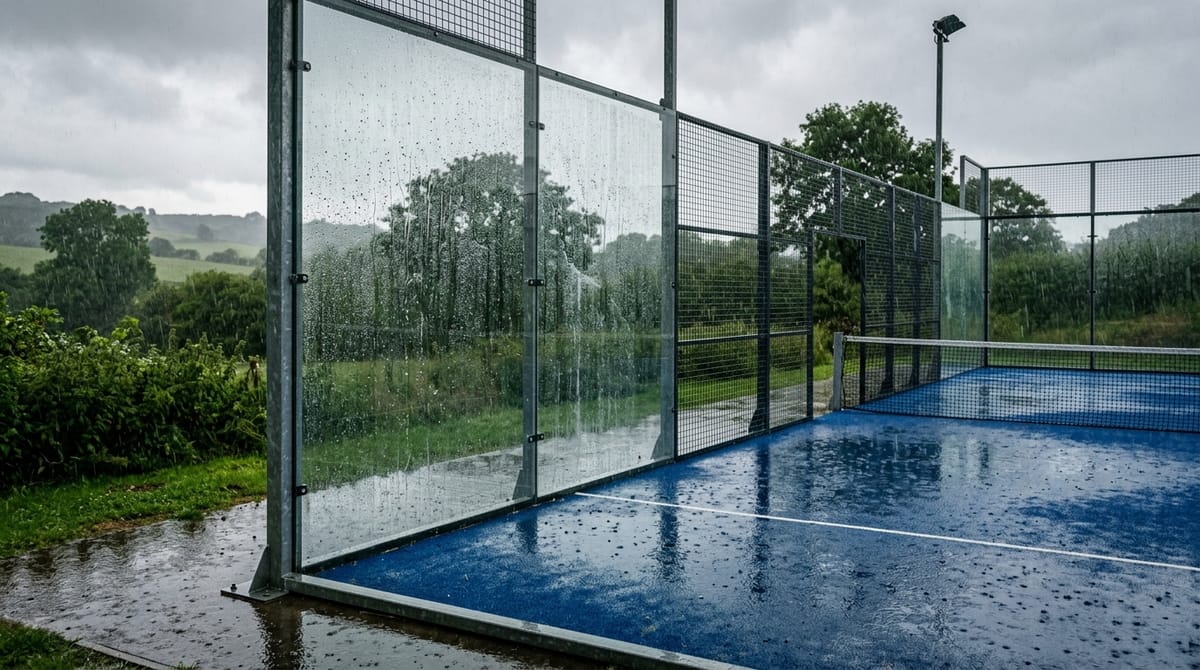
Padel in the UK means dealing with the weather. Most courts here are outdoors, and our climate guarantees plenty of drizzle, so the question of whether you can play in the rain comes up constantly. The honest answer: a wet court is more dangerous than most players realise, and knowing when to stop - and where to play instead - matters more than toughing it out.
Can you play padel in the rain?
It depends entirely on how wet the court is. A light passing shower on an otherwise dry court is usually fine to play through, and many players do. But once the surface is properly wet - standing water, a steady downpour, or a court that has not dried after rain - it becomes slippery and unsafe, and the sensible thing is to stop. Steady or heavy rain is a clear no: the risk of a fall outweighs any game.
The trouble is that padel courts do not shed water instantly, so a court can stay treacherous for a while after the rain has passed. If the surface looks shiny, feels greasy underfoot, or has puddles, treat it as unplayable until it has been squeegeed and dried.
Why are wet padel courts dangerous?
Padel is played on artificial grass with a sand infill, a surface that grips well when dry but turns slick when wet. The game also involves constant quick changes of direction, lunges and sudden stops - exactly the movements that cause slips when traction disappears. A wet court dramatically raises the risk of losing your footing, and a hard fall on a solid base can mean a sprained ankle, a wrenched knee or worse.
Wet glass adds to the hazard too: the walls become harder to read and the ball comes off them unpredictably. If you do get caught out mid-match, ease off the pace, shorten your movements and finish the point rather than chasing everything. For more on the injuries these movements can cause, see our guides to common padel injuries and injury prevention.
How does a wet court affect the ball and play?
Beyond the safety issue, rain changes the game itself. A wet ball soaks up water and becomes heavier and slower, so it does not bounce as high or travel as far, and it skids low off a wet surface and off the glass. Serves and volleys lose their zip, and the reliable bounces padel is built around become unpredictable.
The upshot is that even when a damp court is just about playable, the padel is scrappy - lower, slower and harder to control. It is rarely worth persisting for the sake of a poor game when the safer, better option is usually available under cover.
How do outdoor, covered and indoor courts handle wet weather?
Where you play makes all the difference in a wet climate:
- Outdoor courts are the most weather-exposed and the first to close in rain. They are the norm across the UK, which is why washouts are common.
- Covered courts - open-sided but with a roof - keep the rain off the playing surface while still feeling airy. They are a great compromise for the British weather and stay playable through most showers.
- Indoor courts are unaffected by weather entirely, which makes them the reliable choice in winter and during long wet spells - though they are usually in higher demand and can cost more to book.
For a fuller comparison of the two main types, see our guide to indoor vs outdoor padel.
What do clubs do when it rains?
Clubs take wet courts seriously, because a slip on their surface is their liability. Most will close outdoor courts when they are unsafe, use squeegees to clear water and speed drying once the rain stops, and operate a rain or cancellation policy so you are not charged for a washed-out booking - though the details vary, so it is worth checking your club's terms. In winter, many clubs steer bookings towards their covered or indoor courts. If you have booked an outdoor court and the forecast turns, call ahead: they may be able to move you under cover.
What kit helps for damp UK padel?
You cannot beat the weather, but the right kit helps you cope with the UK's damp conditions:
- Grippy padel shoes. A good padel-specific sole with plenty of tread gives you the best chance of traction on a slightly damp court - see our guide to the best padel shoes.
- Spare overgrips. A wet handle is a slippery handle; a fresh, tacky overgrip and a spare in your bag make a real difference.
- A towel. To dry your hands, the grip and your glasses between points.
- Layers. A light waterproof and warm layers for the cold, damp days that are so common on outdoor courts.
Frequently asked questions
Can you play padel in the rain?
Is it dangerous to play on a wet padel court?
Does rain affect the padel ball?
Where can you play padel when it rains in the UK?

Indoor vs Outdoor Padel

Best Padel Shoes
Common Padel Injuries