Padel Injuries Beyond the Elbow: Knee, Shoulder, Ankle
After tennis elbow, padel's commonest injuries hit the knee, shoulder, ankle and lower back. What causes them, how to prevent them, and when to see a GP.
Padel injuries are not limited to the forearm. While padel elbow gets most of the attention, the sport's rapid changes of direction, lunges and overhead shots load the knee, shoulder, ankle and lower back just as hard. A 2023 systematic review of padel injuries found the elbow was the single most-injured site, but the knee, shoulder and lower back followed close behind, with most problems being tendon and muscle injuries rather than dramatic one-off accidents.
This guide covers the four areas padel players hurt most often after the elbow: what causes each injury, how to lower your risk, and the warning signs that mean you should stop self-treating and see a professional.
What are the most common padel injuries?
Padel has a real injury rate, even if it feels gentler than tennis or squash. The same systematic review reported roughly 3 injuries per 1,000 hours of training and 8 per 1,000 matches, with injury affecting a large share of regular players. A separate survey of amateur players put the overall prevalence at about 54%, and being over 30 was linked to a higher chance of injury.
Ranked roughly by how often they occur, the areas to watch are:
- Elbow and forearm - lateral epicondylitis, the classic "padel elbow", covered in detail in our padel elbow guide.
- Knee - twisting and lunging injuries to the cartilage, tendons and ligaments.
- Shoulder - overhead-load injuries to the rotator cuff and tendons.
- Ankle and foot - sprains from quick lateral movement, which topped the list in one amateur study.
- Lower back - muscular strain from rotation and overhead extension.
The common thread is that most padel injuries build up over time through repeated load rather than arriving in a single moment, which is exactly why they respond so well to prevention.
Why does padel cause knee injuries?
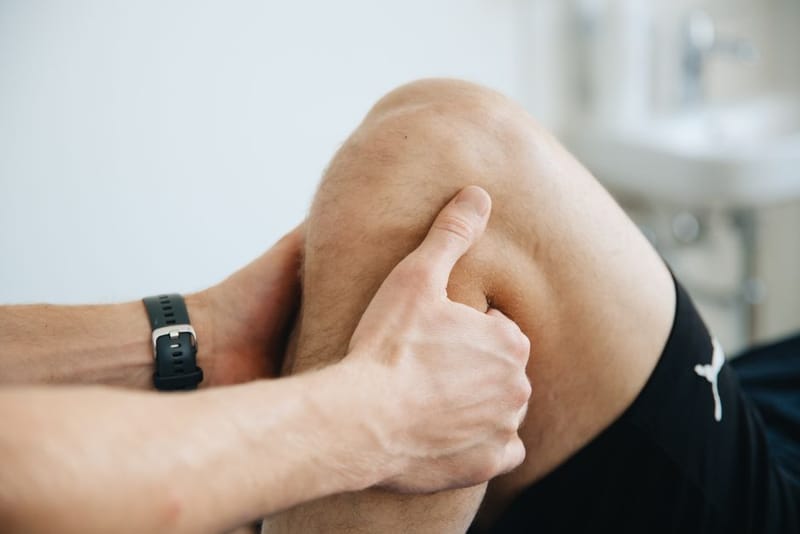
The knee takes a beating in padel because the game is built on sudden stops, low lunges and fast turns. Chasing a ball off the back glass, planting hard to change direction, and dropping into a low volley all force the knee to absorb load while it twists, which is the mechanism behind most non-contact knee problems.
The injuries players see most often are patellar tendinopathy (pain in the tendon just below the kneecap, sometimes called jumper's knee), meniscus irritation from twisting under load, and strains of the ligaments that stabilise the joint. These usually start as a niggle that worsens through a match or over several weeks. Strong glutes, quads and hamstrings act as shock absorbers for the knee, so players who add even basic lower-body strength work tend to fare better.
What causes shoulder injuries in padel?
Shoulder trouble in padel comes mainly from overhead shots. The smash, the bandeja and the vibora all load the shoulder near the top of its range, and repeating them through a long session stresses the rotator cuff (the group of muscles and tendons that hold the shoulder joint stable). Over time that can lead to rotator cuff tendinopathy or impingement, where tendons are pinched as the arm lifts.
Players who serve and smash hard without conditioning the shoulder are most at risk, as are those returning after a layoff who jump straight back to full-intensity overheads. Warming the shoulder thoroughly and building gradually into overhead volume during a session both help. Technique matters too: a smash driven mostly by the arm, rather than rotation through the trunk and legs, concentrates load on the shoulder.
How common are ankle injuries in padel?
Ankle sprains are among the most frequent acute injuries in padel, and in one cross-sectional study of amateur players the ankle and foot were the single most-affected region. The cause is the game's constant lateral movement: side-stepping to cover the court, planting to push off, and the occasional awkward landing all put the ankle at risk of rolling, which sprains the ligaments on the outside of the joint.
Court surface and footwear play a big part. Padel-specific shoes with a herringbone or omni-court sole give better grip and lateral support than running shoes, which are built for forward motion and offer little side-to-side stability. Anyone with a history of ankle sprains is more likely to sprain again, so targeted balance and stability work is worth the time.
Can padel cause lower back pain?
Yes. The lower back ranks among the more commonly injured areas in padel because so many shots combine rotation with extension. Arching back to reach an overhead, twisting through the core to generate power, and repeatedly bending for low balls all load the lumbar spine and the muscles around it. Most padel back pain is muscular strain rather than anything structural, and it typically eases with rest and gentle movement.
A strong, well-conditioned core shares the load that would otherwise fall on the lower back, so core and hip work is one of the highest-value additions a padel player can make to their training. Players who sit at a desk all week and then play hard at the weekend are especially prone to back niggles, because tight hips and a deconditioned core leave the spine doing more of the work.
How can you prevent padel injuries?
Most padel injuries are preventable, because most are overload injuries rather than freak accidents. The fundamentals that lower your risk across all four areas are:
- Warm up properly - raise your heart rate and move the joints through their range before you play. Our padel warm-up routine walks through a five-minute sequence.
- Build strength and conditioning - even two short sessions a week of lower-body, core and shoulder work makes the joints more resilient.
- Wear padel-specific footwear - shoes built for lateral support protect the ankle and knee far better than running trainers.
- Increase load gradually - if you have not played in a while, build back up over a few weeks rather than going straight to daily matches.
- Sharpen your technique - efficient overheads and footwork spread load across the body instead of dumping it on one joint.
For a fuller plan covering all of these, see our dedicated padel injury prevention guide.
When should you see a GP or physiotherapist?
Many minor padel strains and sprains improve on their own with self-care. NHS guidance on sprains and strains recommends rest, ice, compression and elevation for the first couple of days, then gentle movement as the pain settles, with most mild injuries improving within one to two weeks.
See a GP, physiotherapist or urgent care if any of the following apply:
- You cannot put weight on the joint or use the limb normally.
- The pain is severe, or there is significant swelling or bruising.
- A knee locks, gives way or will not straighten.
- There is numbness, tingling or a cold, pale limb.
- The injury has not improved after a couple of weeks of self-care, or keeps coming back.
A physiotherapist can diagnose the specific problem and build a rehabilitation plan, which usually gets players back on court faster and lower the chance of the injury returning.
Frequently asked questions
Is padel bad for your knees?
Can you play padel with a shoulder injury?
How long do padel injuries take to heal?
Should I see a GP or a physiotherapist for a padel injury?
Padel Elbow: Causes, Treatment and Prevention
Padel Injury Prevention