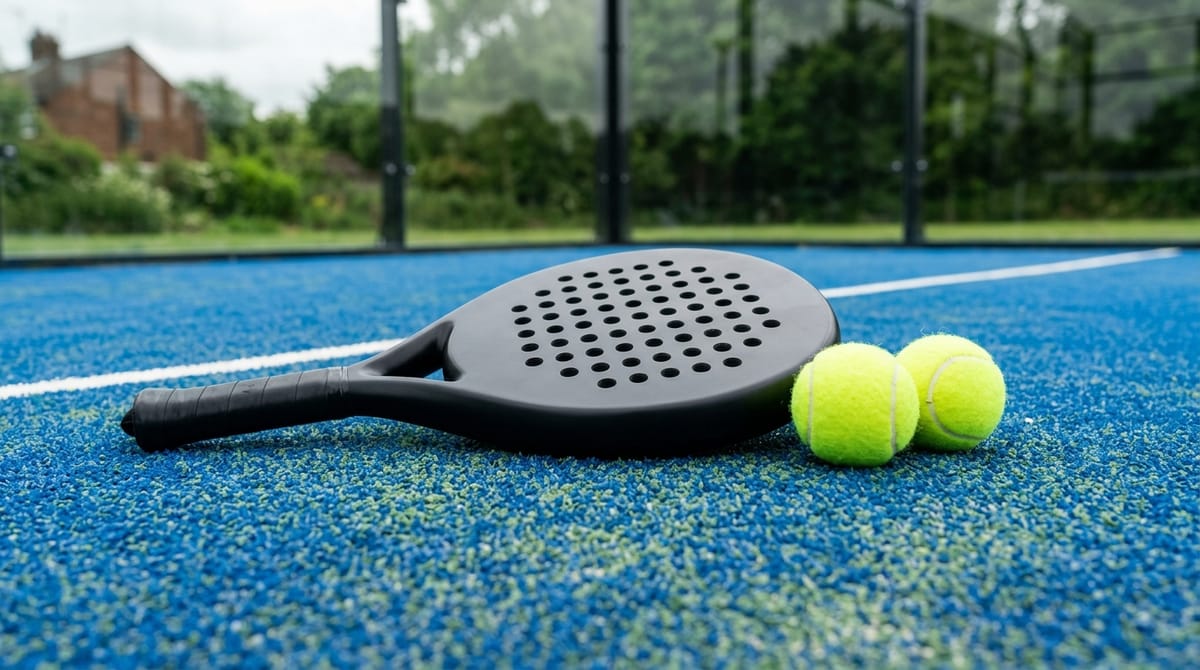
Padel Warm-Up Routine to Prevent Injury (UK 2026)
A dynamic 8 to 10 minute padel warm-up that primes shoulders, wrists, hips and ankles to cut injury risk, plus what to skip and how to cool down.

Padel is harder on the body than it looks. Quick lateral pushes off the side glass, sudden stops, overhead smashes and the wristy strokes the game rewards all load the shoulder, elbow, wrist, ankles and lower back, and a cold start is when those areas get hurt. A short, structured warm-up is the single easiest habit to protect them. This guide gives you a practical routine you can run on court in under ten minutes, explains why each part matters, and covers the cool-down most players skip. For the wider picture on common injuries and how to avoid them, see our padel injury prevention guide.
Why warm up before padel?
Warming up gradually raises your heart rate, increases blood flow to the muscles and primes the nervous system, so you move better and tear less. The evidence is consistent: a review of warm-up research found that dynamic warm-ups improve athletic performance and help prevent injury across a range of sports, and players who warm up dynamically suffer fewer strains, sprains and overuse injuries than those who skip it or rely on static stretching alone. Racket sports have their own evidence-based programmes too: the Tennis 10+ on-court warm-up was designed around the injury patterns racket players actually get, targeting the shoulder, elbow, wrist, hip, calf, spine and knee. Padel loads those same areas, so the principle carries straight across.
The 8 to 10 minute padel warm-up routine
Raise your pulse (2 minutes)
Jog gently around the court, add some side-shuffles in both directions and a little skipping. The aim is to feel slightly warm and breathe a bit harder, not to tire yourself out. Cold muscles are stiff muscles, so this comes first.
Ankle and calf mobility (1 minute)
Ankle circles each way, then 10 to 15 calf raises, then a few slow walking lunges. Padel involves constant lunging to dig balls out of the corners, so prepare the ankles and calves before you load them at speed.
Leg swings and hip openers (1 to 2 minutes)
Holding the fence for balance, swing each leg forwards and back 10 times, then side to side 10 times. Add a few deep but controlled lunges with a gentle twist. This opens the hips for the low volleys and the sideways push-off the game demands.
Shoulder and arm circles (1 minute)
Large arm circles forwards and backwards, then smaller controlled rotations. If you have a resistance band, a set of pull-aparts is ideal. The shoulder takes a pounding from smashes and overheads, so wake it up gradually before you swing hard.
Wrist and forearm prep (1 minute)
Wrist circles both ways, then gently stretch the forearm flexors and extensors by extending each arm and easing the palm up and down with the other hand. Padel is wristy, and this is your best guard against tennis and golfer's elbow.
Dynamic torso rotations (1 minute)
Stand tall and rotate your trunk left and right with relaxed arms, gradually increasing the range. The forehand, backhand and serve are all rotational, and a warm, mobile mid-back protects the lower back.
Shadow swings (1 minute)
Mime your forehand, backhand, volley and smash motions without a ball, slowly at first then closer to match speed. This rehearses the movement patterns and grooves your timing before the first real ball.
Gentle rallies, building up (1 to 2 minutes)
Start softly at the net with short, controlled exchanges, then move back and rally full-court, and finish with two or three smashes at easy pace. Only once everything feels loose and connected should you start playing points.
Which body areas matter most in padel?
Shoulder - smashes and overheads load the rotator cuff repeatedly, so arm circles and band work matter most here.
Elbow and wrist - the wristy strokes and balls played off the glass put strain on the forearm tendons, the classic cause of tennis and golfer's elbow.
Ankles and calves - fast lateral pushes and sudden stops are the most common cause of sprains, so mobilise them before you sprint sideways.
Hips and knees - lunging low for volleys and digs needs open, warm hips and stable knees.
Lower back - the combination of rotation and reaching overhead is hard on the spine, which a torso warm-up protects.
Dynamic or static stretching: which and when?
Do your stretching in the right order. Before you play, keep it dynamic: movements that take your joints through their range while keeping the muscles warm and ready, like leg swings, lunges and arm circles. Long, held static stretches before exercise can briefly reduce power and do little to prevent injury, so they are not the way to start. Save static stretching for afterwards, when your muscles are warm and you want to maintain or improve flexibility. In short, move to warm up and hold to cool down.
How should you cool down after padel?
Do not just stop dead after the last point. Walk or jog gently for a couple of minutes to bring your heart rate down, then hold some easy static stretches for the calves, hips, shoulders and forearms, around 20 to 30 seconds each. A short cool-down helps your muscles recover and keeps you supple for the next session. Rehydrate while you stretch, especially after a hot or long match.
Frequently asked questions
How long should a padel warm-up be?
Should you stretch before playing padel?
What is the best warm-up for padel beginners?
Can a warm-up prevent tennis elbow in padel?
Padel Injury Prevention UK 2026
Padel Fitness Training UK 2026
Padel for Beginners UK 2026