Round Head Shape Padel Rackets: A Control Guide
Round-head padel rackets put control and forgiveness first. What the shape does, who it suits, how to choose one, and our standout UK round pick.

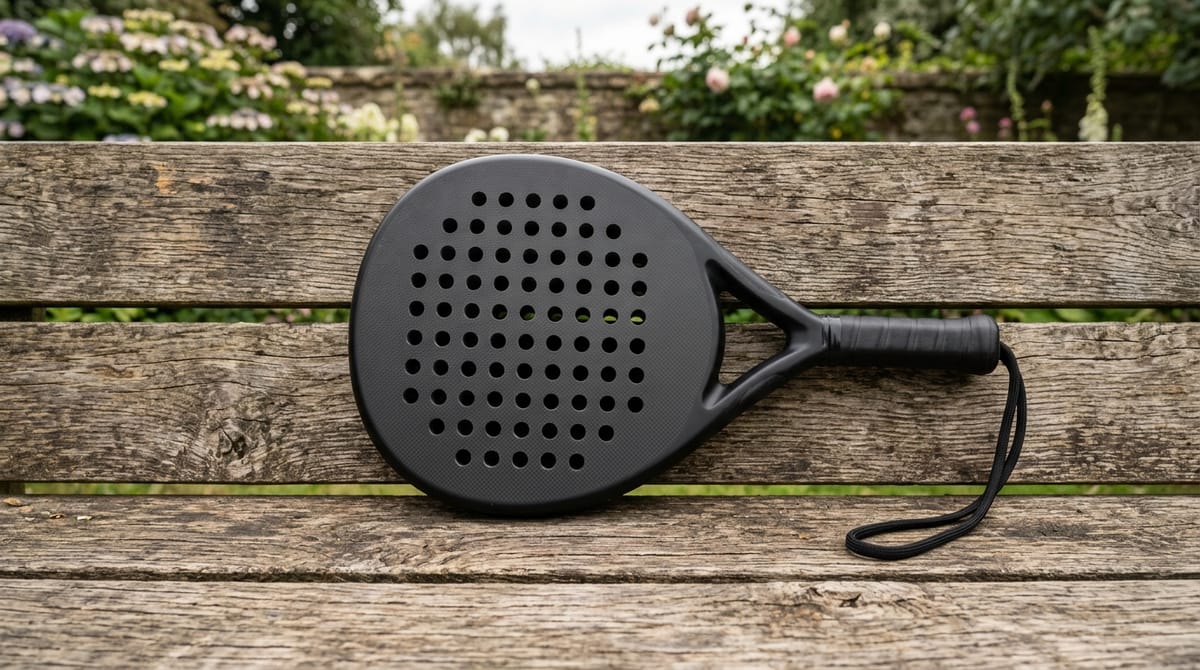
Head shape is the first thing that decides how a padel racket plays. Round is the shape built for control. By moving the balance point down towards the handle and centring the sweet spot, a round frame trades a little power for a large, predictable hitting area that is far more forgiving on off-centre shots. If you are still grooving your technique, or you win points by placing the ball rather than blasting it, round is almost always the right call.
What is a round head shape padel racket?
Padel rackets come in three head shapes: round, teardrop and diamond. The shape controls where the sweet spot sits and how the weight is distributed. On a round racket the widest part of the head is low, so the sweet spot falls in the centre of the face, closer to your hand. That low, centred balance is what makes the racket feel manoeuvrable and stable at the same time.
Because the mass is spread around the middle rather than pushed up towards the tip, a round frame has the largest effective sweet spot of the three shapes. Shots you catch slightly high, low or off to the side still come off cleanly, where a more head-heavy racket would twist or drop the ball into the net.
Who should use a round padel racket?
Beginners and improvers
The forgiving sweet spot hides mistimed shots while you build consistency, so you spend more time rallying and less time fetching the ball.
Control-first players
If you win points with placement, lobs and steady defence rather than raw smash power, round rewards that game.
Players who want to protect their arm
The low balance and softer feel put less strain on the elbow and shoulder, which matters if you play often or have had tennis/golfer's elbow.
Anyone who plays a lot of defence
Round frames are quick to the ball off the back glass, where manoeuvrability beats power.
The trade-off is at the top end of the swing. A round racket will never generate the free power of a diamond frame on a full-blooded smash, so out-and-out attacking players who already have clean technique often prefer teardrop or diamond. For everyone else, the control and forgiveness are worth far more than the missing few per cent of power.
Round vs teardrop vs diamond: how do the shapes differ?
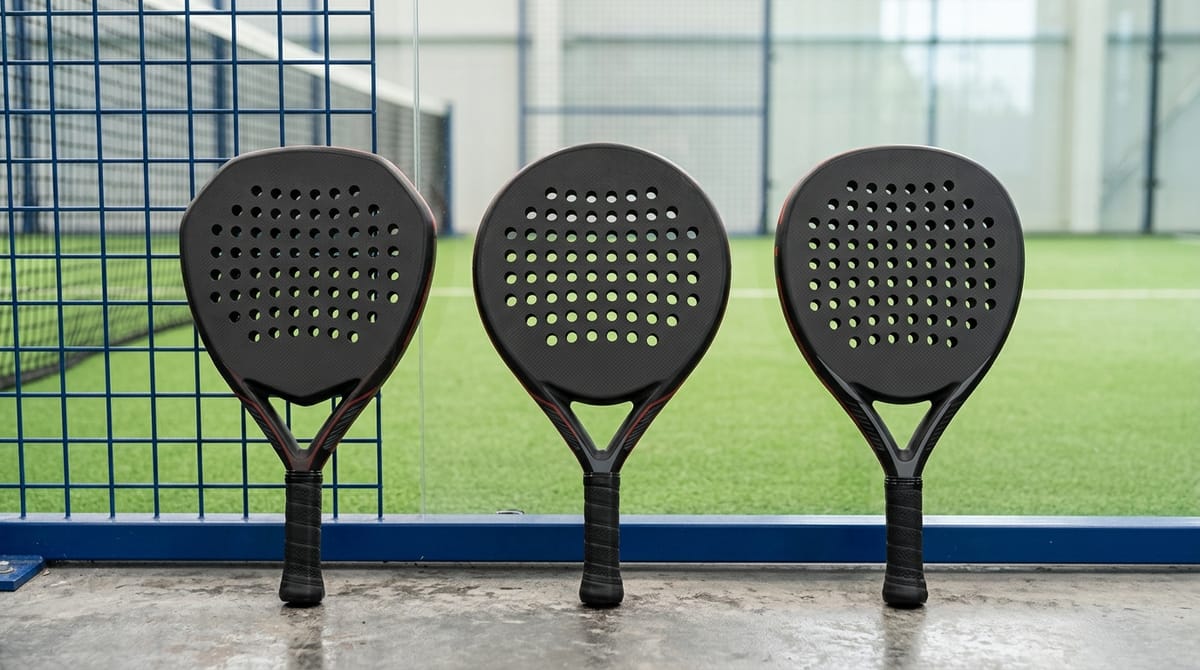
The three shapes sit on a spectrum from control to power. Round is the control end, diamond is the power end, and teardrop is the balanced middle ground. Our full diamond vs round vs teardrop comparison goes deeper, but here is the short version.
Head shape at a glance
- Round
- Sweet spot low/centred - most control, largest sweet spot, most forgiving, least power. Best for beginners and control players.
- Teardrop
- Sweet spot mid-face - balanced power and control, most versatile. Best for improving intermediates who want a bit of everything.
- Diamond
- Sweet spot high near the tip - most power, smallest sweet spot, least forgiving. Best for advanced, aggressive players with clean technique.
What are the pros and cons of a round racket?
What we liked
- Largest, most forgiving sweet spot of the three shapes
- Excellent control for placement, lobs and defence
- Low balance makes it quick and easy to manoeuvre
- Gentler on the arm - lower injury risk with regular play
- The most beginner-friendly shape by a distance
Watch out for
- Less free power on smashes than teardrop or diamond
- Advanced attackers may feel it caps their finishing
- Fewer high-end models - most pro frames are diamond
How does a round racket change the way you play?
The round shape does not just affect isolated shots, it changes the rhythm of your game. Because the sweet spot is so forgiving, you can commit to longer rallies without the unforced errors a smaller sweet spot punishes. That consistency is the foundation of good padel: keep the ball in play, wait for the short reply, and take the net.
At the net a round racket is quick to reposition for volleys, and its stability helps you block hard drives back into court rather than popping them up. On defence off the back glass, the low balance lets you get the face to awkward, low balls that a head-heavy diamond would be slow to reach. Where the shape asks more of you is on the finish: you generate power on the smash through technique and timing rather than leaning on the frame. Most club players make that trade happily.
How do you choose a good round padel racket?
Once you have settled on a round shape, four things separate a good round racket from a frustrating one:
- Weight. Aim for roughly 360-370g. Too light and the racket gets pushed around on hard shots; too heavy and it tires your arm.
- Balance. A genuinely low or centred balance is what makes a round racket feel like a round racket. Check the spec, not just the outline - some "round" frames are quite head-heavy.
- Core. A softer EVA core adds comfort and control and is kinder to the arm; a harder core adds power but less forgiveness. Beginners should lean soft. Our guide to padel racket cores covers this in detail.
- Face material. Fibreglass faces are softer and more forgiving; full carbon is stiffer and more powerful but less arm-friendly. A carbon/fibreglass mix is a sensible middle ground for control players - see carbon vs fibreglass.
If you are not sure where to start, our how to choose a padel racket guide walks through weight, balance and shape together.
What is our standout round padel racket in the UK?
Genuine round frames are less common than diamond ones, so the round shelf is smaller. The clearest round pick in our current lineup is the Babolat Counter Veron - a control-first frame with a low, centred balance that shows exactly what the round shape is meant to do.
Babolat Counter Veron
Round, control-first Babolat frame: 365 g, low balance, Carbon Flex (carbon + fibreglass) face and multi-density EVA core for a soft, forgiving feel.
Check priceDo professional players use round rackets?
Most touring professionals favour diamond frames: they already have the technique to control the extra power and they want maximum finishing on the smash. You will still see round and hybrid shapes in the hands of control specialists and players managing arm strain, but power frames dominate the top of the game.
For club players the lesson is the opposite of copying the pros. The diamond racket that suits a world-tour attacker is usually the wrong tool for a developing game, where consistency wins far more points than power. Match the shape to your level and style, not to the racket your favourite player endorses.
Frequently asked questions
Are round padel rackets good for beginners?
Do round rackets have less power?
Is a round or teardrop racket better?
What weight should a round padel racket be?
Are round rackets easier on the arm?
Sources
Diamond vs Round vs Teardrop Padel Rackets
How to Choose a Padel Racket UK 2026