Padel Glossary: Key Terms Explained (2026)
A padel glossary of key terms for UK players: shots like bandeja and vibora, the walls and por tres, scoring, tactics and gear, explained simply.
Padel has a language of its own, much of it Spanish (the sport is described in full on Wikipedia), and picking it up makes the game far easier to follow and learn. This glossary gathers the terms you will actually hear on a UK court, grouped so you can find them quickly, with the most important shots linked to full how-to guides.
What are the key padel shot terms?
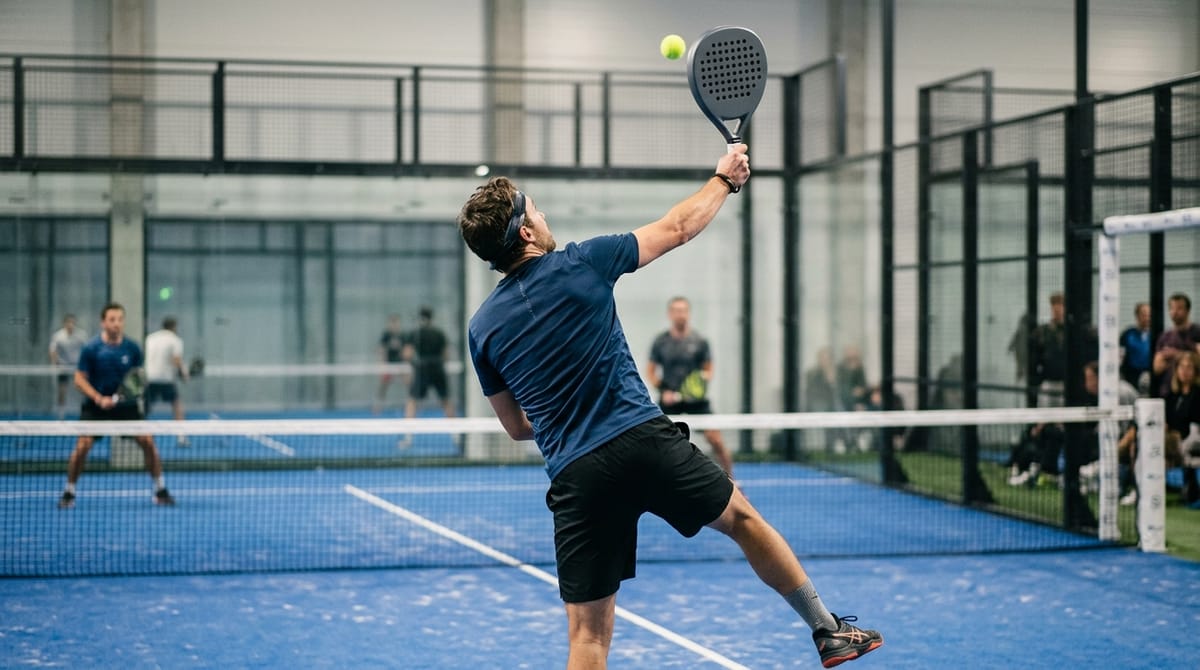
Bandeja (Spanish for tray) is a controlled, flat overhead used to reset a point and hold the net, named for the tray-like swing path. See our bandeja guide.
Vibora (viper) is a more aggressive overhead hit with side-spin so the ball hisses and curls; our vibora guide covers it.
Remate is the smash, the power overhead used to finish points, explained in our smash guide.
Chiquita (little one) is a soft, low ball played to the net players' feet to win the net, covered in our chiquita guide.
Gancho (hook) is an advanced hooking overhead that rescues a ball escaping off the side glass; see our gancho guide.
Globo is the lob, a high ball over the net players, explained in our lob guide.
Volea is the volley, a ball hit before it bounces.
Bajada is a shot played off the back wall as the ball drops.
Rulo is a heavily sliced, low-bouncing overhead, a cousin of the vibora.
What are the court and wall terms?
Back glass is the transparent wall behind each pair; playing the ball off it is a core skill, covered in our back-glass guide.
Side wall is the glass or mesh along the sides; balls often rebound off it as well as the back.
Por tres is a smash hit so hard that the ball bounces out of the court over the side fence for a winner; por cuatro uses the back glass similarly.
The gate is the open doorway in the side of the court, through which a ball can legally be chased and played from outside.
Mesh or fence refers to the metal sections of the walls, which give a less predictable, deader bounce than glass.
What are the scoring and rules terms?
Padel uses the same scoring as tennis (15, 30, 40, game), explained in our scoring guide.
Golden point (punto de oro) is a sudden-death point played at deuce in many formats, where the receiving pair chooses the side.
Let is a replayed point, for example when a serve clips the net and lands in.
Fault is an illegal serve or shot. The serve itself must be hit underarm, below waist height, after one bounce. Full details are in our rules guide.
What are the tactics and position terms?
Net position is the attacking position at the front of the court, the side that usually wins points.
The back is the defensive position, from which pairs try to win the net with chiquitas and lobs.
Drive is a flat groundstroke hit with pace, often used on the return.
Split step is the small hop, timed to your opponent's hit, that keeps you balanced and ready to move; see our footwork drills.
Cross-court and down the line describe the direction of a shot, diagonally or straight ahead.
What are the gear terms?
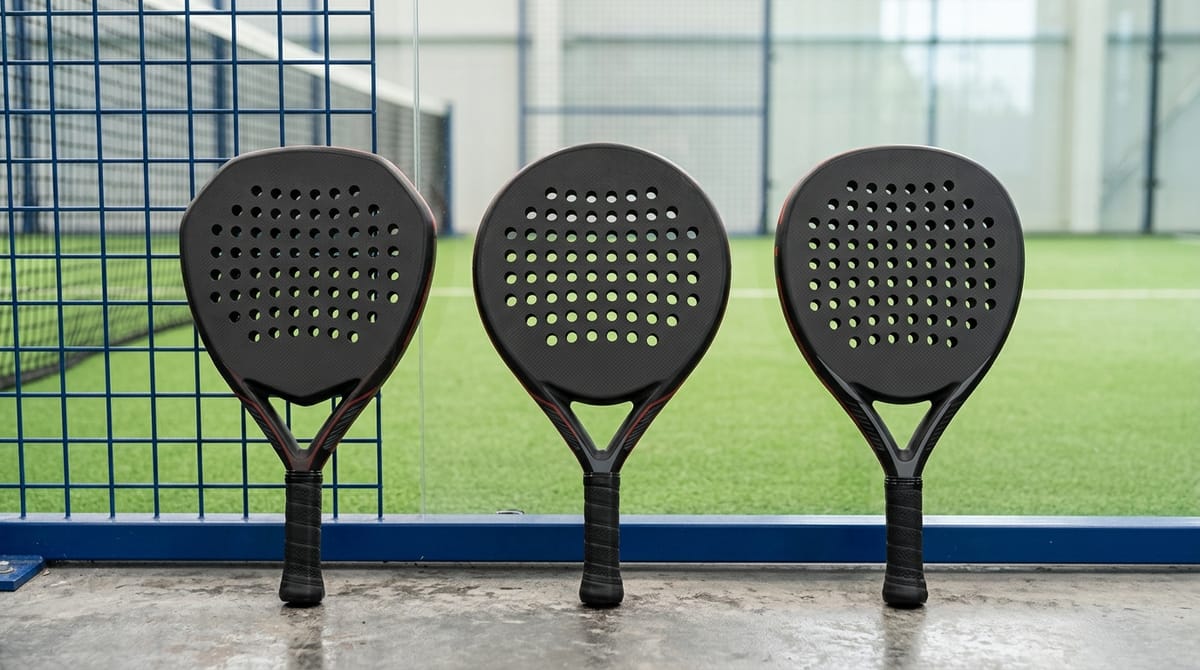
Diamond, round and teardrop describe the three racket head shapes, which set the balance between power and control; our shape guide explains them.
Balance is how far the racket's weight sits toward the head, driving the power-versus-manoeuvrability trade-off.
EVA and FOAM are the two main core materials, EVA being firmer and more durable, foam softer and more powerful.
Overgrip is the replaceable wrap around the handle for grip and comfort; see our overgrip guide.
Bandeja and vibora, listed above, are also sometimes used to describe the racket profiles best suited to those shots.
Frequently asked questions
Why are padel terms in Spanish?
What is the difference between a bandeja and a vibora?
What does por tres mean in padel?
What is a golden point in padel?
Padel Rules Explained
Padel for Beginners UK 2026
The Bandeja Shot in Padel UK 2026